The Contract You Probably Haven’t Seen
Your city council voted on it. Maybe you saw a brief agenda item, or maybe you missed it entirely. Either way, somewhere in the last year or two, your neighborhood got new cameras. They’re not just recording anymore. They’re analyzing. They’re flagging behavior. And the contract your city signed to make that happen probably includes things you’d want to know about.
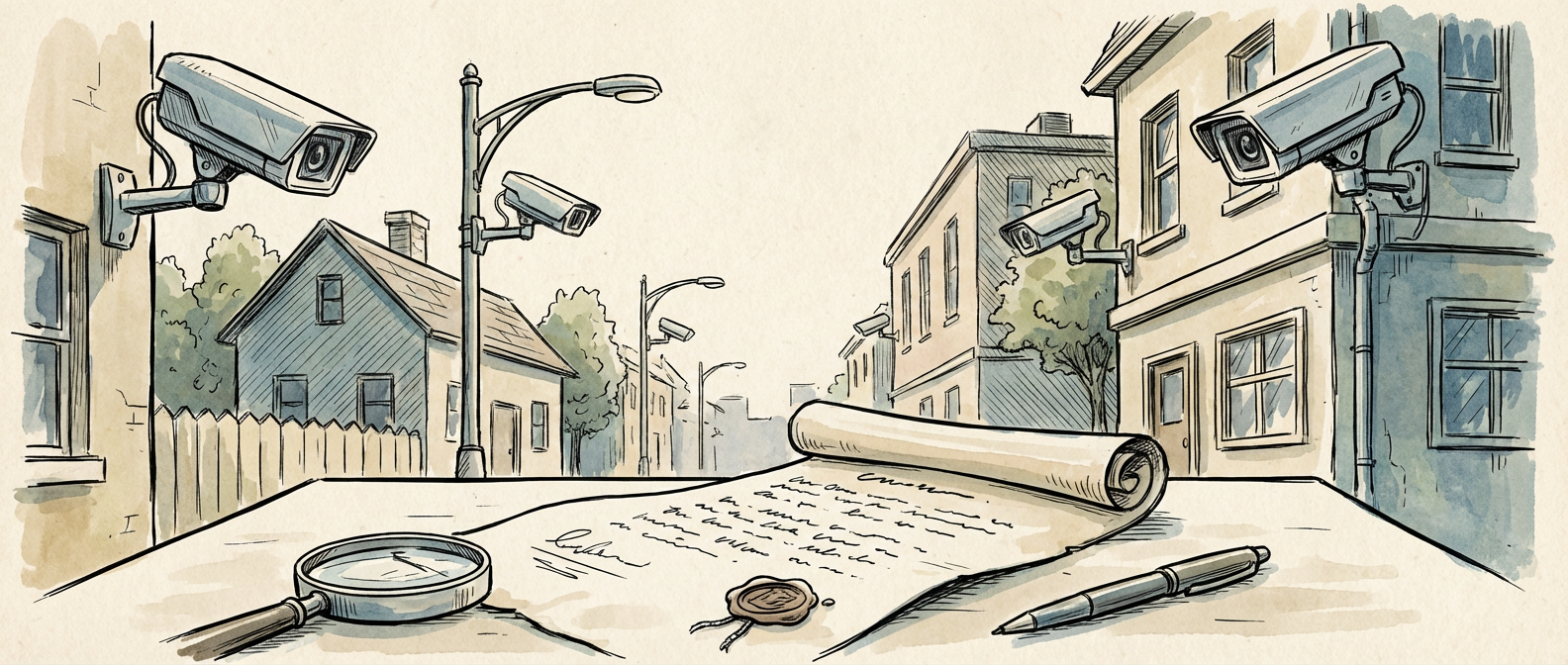
I’m not being dramatic. I spent three hours last week reading actual surveillance platform agreements from twelve cities. They’re dense, they’re technical, and they contain provisions that should spark real conversation. Most people never see them at all. That’s not an accident. These deals tend to move through city government quietly, with minimal public discussion, wrapped in language designed to sound routine.
Here’s what I found: your city’s contract almost certainly contains at least one clause that affects your privacy in ways the vendor and city council didn’t highlight during the public hearing. Maybe no one even held a public hearing.
The National Picture: Where We Are Right Now
You’re not alone if this feels new. Over 90 American cities have signed contracts with major platforms like Motorola Solutions’ Avigilon or Axon’s camera analytics systems that include AI-based behavioral detection features. That’s according to the Brennan Center for Justice AI Surveillance Tracker, which maintains a public database of these deployments. If your neighborhood is one of them, you can see it listed there.
What matters more than the number is what those contracts allow. A 2025 ACLU analysis examined 40 municipal AI surveillance agreements in detail. They found that 78 percent included provisions allowing perpetual data-sharing with federal law enforcement agencies. Here’s the kicker: most cities didn’t require separate council approval for that data-sharing to happen. It was just built into the deal. Your council voted on a camera system. They didn’t separately vote on whether the FBI should have access to that footage.
This isn’t theoretical. We know what happens when these systems fail. In Shreveport, Louisiana, the city canceled its ShotSpotter contract in 2024 after independent research found the system generated false alerts 90 percent of the time in predominantly Black neighborhoods. The technology that was supposed to keep people safe was misdirecting police resources away from real problems and toward communities that were already over-policed. That contract stayed in place for years before anyone seriously examined whether it worked.
The Accountability Gap That Matters
Here’s a number that should concern you: fewer than 15 percent of American cities with AI surveillance contracts have enacted any algorithmic accountability ordinance. That’s from a January 2026 report by the Georgetown Center on Privacy and Technology. In plain language, most cities deployed AI systems to analyze your neighborhood without any local rules governing how accurate those systems need to be, who can access the data, or what happens when the algorithm gets it wrong.
Think about what that absence means. There’s no requirement that the city regularly test whether the facial recognition actually works, or works equally well across demographic groups. No mandate for a public audit. No process to correct a flagged incident if the AI made a mistake. No mechanism for you to even know that you were flagged.
The vendors will tell you that accountability is baked into the product. They’re not lying, exactly. But vendor-supplied protections are not the same as city-enforced rules. When the contract’s up for renewal, the vendor’s incentive is to renew it. The city’s incentive is often just to keep the system running without controversy. Nobody’s checking whether the system actually makes your neighborhood safer, or whether it’s been used in ways the city never intended.
What a Real Standard Actually Looks Like
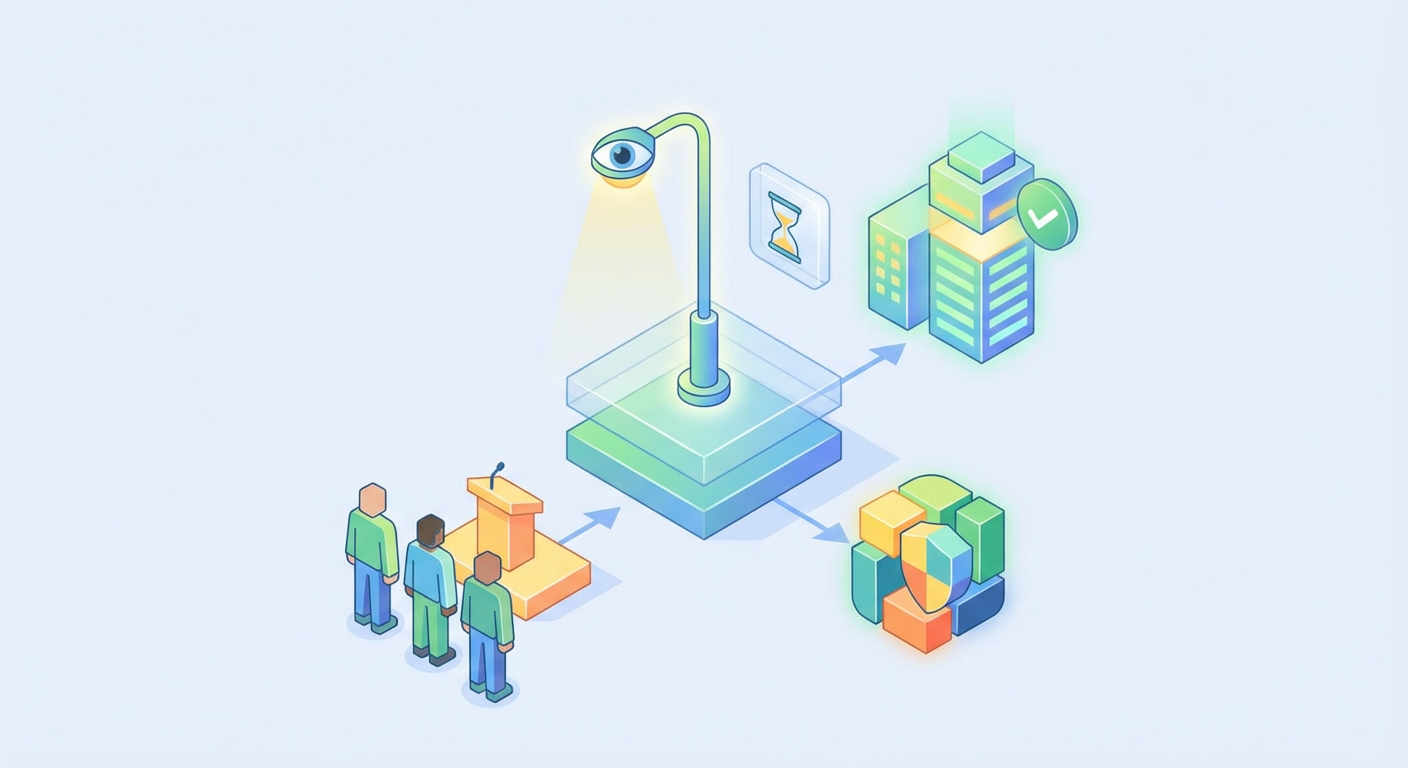
San Diego isn’t perfect. No city is. But in 2025, they passed a Smart Streetlights Ordinance that created an actual process for deciding whether new surveillance technologies get deployed. Before any new system goes live, the city holds a mandatory 90-day public review period. Then the city council needs a supermajority vote to approve it. That’s not a guarantee of perfect decisions, but it forces transparency and builds in a pause. Most cities don’t have that. For most cities, it’s not too late to implement something similar.
You don’t need technical expertise to advocate for it. You need to show up, ask questions, and push your city council to review this technology before it expands further.
What You Can Actually Do
Start by finding out what your city has. Is there a camera system in your neighborhood? Does it include AI analytics? The information exists. It’s in city council minutes, budget documents, and staff reports. Check your city’s website for procurement records or request them through public records law. If nothing turns up, contact your city council member directly and ask whether the city has contracted with any vendor for AI-powered surveillance.
Once you know what’s there, read the contract. It’ll be dense. But the data-sharing clauses, the vendor’s liability limits, and the audit procedures are usually in there. Note the sections that seem vague or overly broad. Screenshot them. Bring them to a city council meeting.
Find other people who care about this. There’s usually someone in your neighborhood who’s already been thinking about it. You don’t need a formal organization. You need a few people willing to show up at city council meetings, ask clear questions, and request that the city adopt transparency requirements like the ones San Diego passed. That takes time, but it’s just persistence, not rocket science.
Your neighborhood deserves technology with real oversight behind it. That doesn’t happen automatically. It happens because people notice what their city is doing and ask why.