Category: My Blog

Why Your PTA Meeting and City Council Keep Fighting (And How Busy Families Can Help Fix It)

The Tuesday Night Wars Nobody Talks About

Last Tuesday, while most of us were helping kids with homework or catching up on laundry, two important meetings happened in our town. The school board discussed the new playground equipment funding at 7 PM. City council debated the parks maintenance budget at 7:30 PM. Same money, different rooms, zero coordination.

This isn’t an accident or oversight. It’s a structural problem that’s been brewing in communities across the country, and it’s making civic participation nearly impossible for families who are already stretched thin. When I dug into the meeting minutes from the past six months, I found at least twelve instances where school and city officials were basically arguing about the same resources without ever sitting in the same room.

The result? Parents like Sarah Martinez find themselves running between meetings, trying to advocate for the new crossing guard position that both entities claim isn’t their responsibility. Meanwhile, the crossing guard position remains unfilled, and kids keep walking through that dangerous intersection on Oak Street.

When Good Intentions Create Bad Systems

Here’s what’s really happening: our local government structures were designed in the 1950s when most households had someone available for daytime meetings and civic engagement. School boards, city councils, county commissioners, and special districts all operate on different schedules with different priorities, even when they’re dealing with connected issues.

Take the recent debate over the community center. The parks department wants to expand programming but needs the school district to share transportation costs. The school board supports the idea but can’t commit funds without knowing the city’s long-term maintenance plan. The city council loves the concept but won’t approve the budget until they understand how it affects school district enrollment projections. Each group is being perfectly reasonable within their own bubble.

Meanwhile, families who might benefit from that expanded programming watch three separate entities debate the same issue across six different meetings over four months. It’s not that officials don’t care about coordination. The system itself makes coordination unnecessarily difficult.

The Real Reason Families Stay Home

When I surveyed neighbors about civic engagement, the responses weren’t what I expected. Most people didn’t say they were uninterested or too busy. They said they felt like their input didn’t matter because decisions seemed to happen in disconnected pieces.

Maria Santos, who works two jobs and has three kids in different schools, put it perfectly: “I went to the city meeting about the bike path, then found out I needed to go to a completely different meeting about school safety policies that would affect the same bike path. By the time I figured out which meeting actually mattered, they’d already voted.”

This fragmentation hits working parents especially hard. When civic participation requires attending multiple meetings to address a single issue, we’re creating a system that only works for people with significant time flexibility. It’s not intentional exclusion, but the effect is the same.

The irony is that local officials consistently tell me they want more family input on decisions. School Superintendent Chen mentioned in last month’s meeting that they’re struggling to get parent feedback on policies that directly affect daily family life. But those same policies often connect with city planning, county health initiatives, and state transportation funding in ways that require families to navigate multiple bureaucracies.

Small Changes That Create Big Opportunities

The good news? Some communities have started experimenting with solutions that don’t require massive structural overhaul. Three towns over, they’ve started holding quarterly “community input sessions” where school board members, city council representatives, and county officials all show up to the same meeting. Parents can address connected issues in one place instead of chasing decisions across multiple meetings.

Closer to home, we could push for better coordination on meeting schedules. Currently, our school board and city council regularly schedule meetings on the same nights, making it impossible for residents to attend both. That’s a fixable problem that doesn’t require anyone to give up authority or change fundamental procedures.

We could also advocate for what other communities call “issue mapping” at the beginning of policy discussions. When the city starts debating something like the downtown revitalization plan, they could identify upfront which other entities need to be involved and create a timeline that allows for meaningful input from residents who care about multiple aspects of the issue.

Individual families can start making a difference right now by asking simple questions at public comment periods: “Which other local entities are working on related aspects of this issue?” and “How can residents provide input that reaches all the decision-makers involved?” These aren’t confrontational questions, but they highlight the coordination gaps that make civic participation unnecessarily complicated.

Building Bridges Instead of Walls

The most encouraging thing I’ve discovered while researching this issue? Local officials across different entities generally want to work together better. The barriers are structural, not personal. School board member Jennifer Walsh told me she’d welcome more coordination with city council on shared issues, but there’s no established process for making that happen.

This creates an opportunity for families to be bridge-builders rather than advocates stuck choosing sides. We can push for structural solutions that make it easier for everyone to participate meaningfully in community decisions. When we frame civic engagement around problem-solving rather than position-taking, we create space for the kind of collaboration our complex community issues actually require.

The next time you’re frustrated by local government inefficiency, consider that the problem might not be the people in the room but the system that keeps the right people in separate rooms. And remember that busy families aren’t just victims of fragmented civic structures. We can be the catalyst for creating better ones.

If you’ve experienced this kind of coordination chaos in our community, or if you’ve seen examples of local governments working together effectively, I’d love to hear about it. Coffee’s always on, and I promise not to assign you any weekend tree-planting duties during the same conversation.
Your Family’s 15-Minute Guide to Actually Making a Difference in Your Community

Start Where You Already Are: The School Board Meeting Hack

Here’s something nobody tells you about civic engagement: you don’t need to become a political junkie overnight. Last month, I watched a parent at our school board meeting ask one simple question about playground equipment funding that led to a $50,000 budget reallocation. She was there for exactly 12 minutes.

Your Family's 15-Minute Guide to Actually Making a Difference in Your Community
Your Family’s 15-Minute Guide to Actually Making a Difference in Your Community

School board meetings are often the most accessible entry point for busy families because the issues directly affect your daily life. Most districts post agendas online 72 hours in advance. Scan for anything mentioning budgets, safety, or programs your kids use. You can often submit written comments ahead of time if you can’t attend, and many boards now offer virtual participation options.

The real trick is timing. Public comment usually happens at the beginning of meetings, so you can speak your piece and leave if needed. Bring a prepared statement that’s under two minutes and focus on one specific issue. Board members remember concrete examples much better than general concerns about “making things better.”

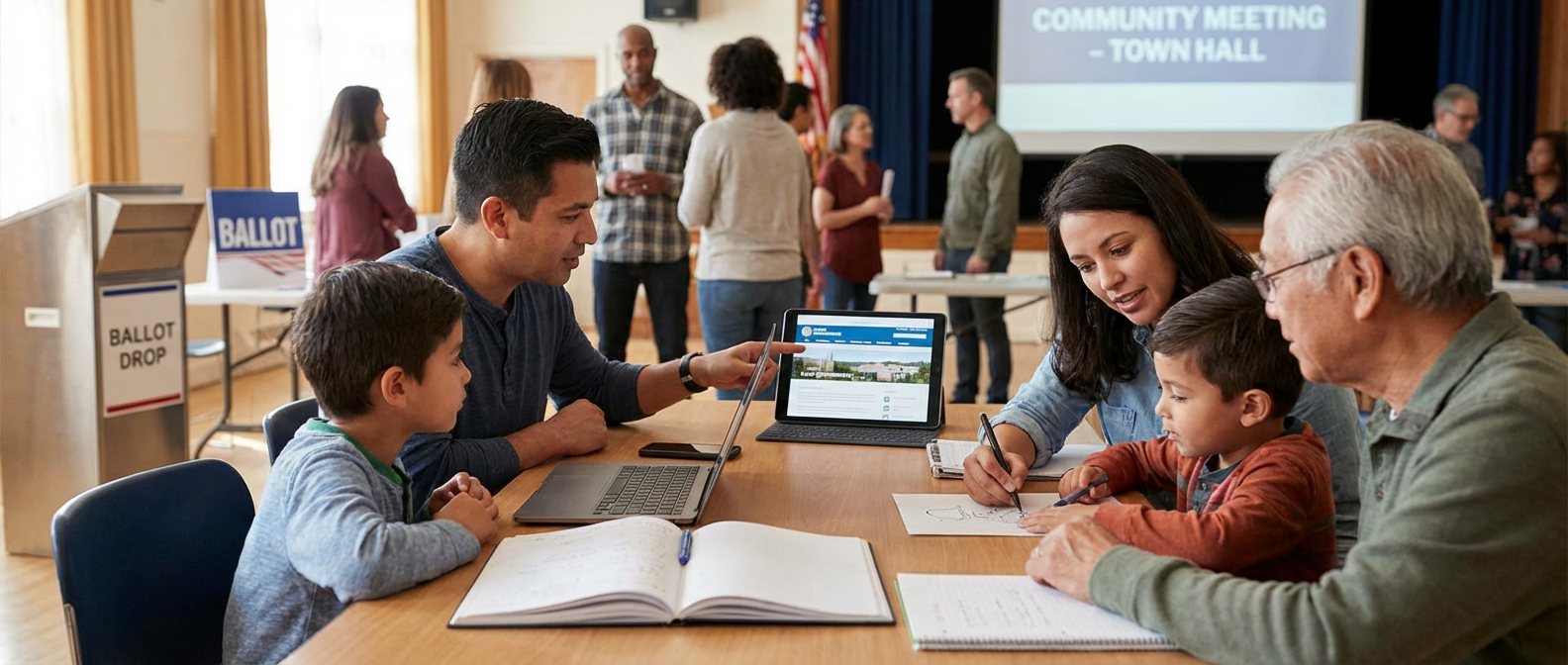
Illustration for Your Family's 15-Minute Guide to Actually Making a Difference in Your Community
Illustration for Your Family’s 15-Minute Guide to Actually Making a Difference in Your Community

The 10-Minute Monthly Check-In That Actually Works

Every first Saturday of the month, I spend ten minutes on my city’s website checking three things: upcoming public hearings, new development proposals in my area, and any budget discussions scheduled for the next month. This tiny habit has helped me catch everything from a proposed dog park two blocks away to changes in our local bus routes.

Most city websites bury this information, but once you know where to look, it becomes routine. Search for “public notices,” “planning commission,” or “city council agendas.” Sign up for email alerts if they’re offered. Many cities also post these notices in local newspapers or community bulletin boards at libraries and coffee shops.

The key is consistency over intensity. You’re not trying to track every municipal decision, just the ones that might affect your family’s daily routine. When something catches your attention, bookmark it and set a calendar reminder for the relevant meeting date.

Making Your Voice Count When You Can’t Show Up

Physical attendance at meetings isn’t always realistic with work schedules and family obligations. The good news is that written testimony often carries equal weight, sometimes more, because officials can reference your specific points during their discussions.

Most local governments accept emailed comments for public record. Address your message to the entire council or board, not just one member. Include your full name and address to verify you’re a constituent. Keep it to one page maximum and lead with your main point in the first sentence. If you’re supporting or opposing something specific, say so clearly rather than dancing around your position.

Phone calls to individual council members’ offices can be surprisingly effective for time-sensitive issues. Staff members track these calls and report weekly tallies to elected officials. A 30-second call saying “I support the proposed bike lane on Oak Street” gets recorded and counted just like a lengthy email.

Social media engagement varies wildly by community, but many local officials do monitor their platforms. Tagging them in thoughtful posts about community issues can generate responses, especially if you’re raising questions rather than just complaining.

Beyond Meetings: The Volunteer Opportunities Nobody Talks About

Every city has volunteer positions that don’t require running for office or attending endless meetings. Planning commissions, parks advisory boards, and library trustees meet monthly or quarterly and focus on specific issues. These positions often go unfilled because people don’t know they exist.

Environmental committees often need volunteers for tree planting, stream monitoring, or sustainability projects that happen on weekends. These activities work well for families because kids can participate meaningfully. Last spring, my eight-year-old helped count native plants for our city’s biodiversity survey and has been our household’s environmental conscience ever since.

Many communities also need volunteers for one-time events like budget forums, community visioning sessions, or neighborhood clean-up coordination. These commitments are bounded and specific, making them ideal for testing your interest in deeper involvement.

Check your city’s website for a volunteer page, or call the main number and ask about citizen advisory positions. County governments often have similar opportunities, particularly around health services, aging programs, and emergency preparedness.

Building Your Family’s Civic Toolkit

Start building relationships before you need them. Introduce yourself to your city council representative at community events. Follow local journalists on social media and thank them when they cover issues you care about. Attend one community event per quarter, even if it’s just the annual street fair or farmers market where local officials often have booths.

Keep a simple digital file of local contact information: your council member, mayor, school board representative, county supervisor, and state legislator. Include their direct email addresses and phone numbers. Update this annually, usually after elections.

Teach your kids to notice their community by walking or biking together regularly and talking about what you see. Point out new construction, changes to parks, road repairs, or business openings. These observations often become the foundation for civic questions later.

Most importantly, connect with neighbors who share your interests. Civic engagement works best when it’s social. Find the person in your area who always knows what’s happening and buy them coffee occasionally. Join or start a neighborhood group chat that shares local information alongside the usual lost pet posts.

Effective civic participation isn’t about becoming a local politics expert overnight. It’s about paying attention to the decisions that affect your daily life and finding small but consistent ways to share your perspective. Whether that’s a two-minute comment at a school board meeting or helping monitor water quality in your local creek, every community needs residents who care enough to show up occasionally and speak up when it matters.

How Three Neighbors Turned Their Block From Crime Hotspot to Community Haven

When the Police Reports Started Piling Up

Maria Santos kept a folder on her kitchen counter that no one should have to keep. Inside were police incident numbers, dates, and descriptions of break-ins, car thefts, and vandalism that happened within two blocks of her house on Maple Street. By March 2022, the folder was getting thick. Her neighbors were installing security cameras, talking about moving, and basically retreating behind locked doors.

The shift happened when Maria bumped into her neighbor Jake while they were both filing reports at the police station. Same day, same incident, different perspectives. Jake had seen someone break into Maria’s car from his living room window but didn’t know whose car it was. Maria had discovered the break-in an hour later. They realized they’d been dealing with the same problems in isolation, and that maybe isolation was part of the problem.

What happened next wasn’t dramatic or revolutionary. It was practical, persistent, and ultimately transformative. Within eighteen months, police calls on their block dropped by 67 percent. More importantly, neighbors who hadn’t spoken in years were organizing block parties, sharing resources, and looking out for each other’s kids and packages.

The WhatsApp Group That Changed Everything

Jake suggested starting with something simple: a neighborhood WhatsApp group. Not for gossip or complaints, but for real-time communication about what was happening on their street. Maria was skeptical. She’d seen neighborhood social media groups turn toxic fast. But Jake had a different approach in mind, borrowed from his experience organizing union activities at work.

They set clear ground rules from day one. The group was for immediate safety concerns, sharing resources, and coordinating positive neighborhood activities. No political arguments, no personal disputes, no shaming people for how their yards looked. They started with just eight households and grew gradually, only adding people who committed to the guidelines.

The first real test came during an attempted break-in at the Hernandez house on a Tuesday afternoon. Mrs. Hernandez posted a quick message that someone was trying her back gate. Within three minutes, four neighbors had stepped outside, two had called police, and one had politely asked the would-be intruder if he needed help finding an address. The guy left quickly. More importantly, Mrs. Hernandez realized she wasn’t alone on the block.

By winter, the group was sharing more than safety alerts. People posted about lost packages, offered to shovel elderly neighbors’ sidewalks, and coordinated carpools to city council meetings when development issues affected their area. The infrastructure they’d built for safety became a foundation for community.

From Digital to Doorsteps

Spring brought the next evolution. Maria had been reading about crime prevention through environmental design, a concept that sounds academic but boils down to common sense: places that look cared for and actively used are less likely targets for crime. Their block had plenty of dark corners, overgrown areas, and spaces that felt abandoned even though people lived there.

The group organized their first “visibility walk” in April. Everyone met at the corner and walked the entire block together, noting which areas felt unsafe and why. Dead streetlights, bushes blocking sight lines, that weird gap between two houses where teenagers had been drinking. Instead of just complaining, they made a list and divided up the action items.

Some fixes were immediate. Neighbors trimmed bushes on their own property that blocked street lighting. Jake, who worked in electrical, helped three households install better porch lighting. Maria started a shared tool library in her garage so people could tackle small maintenance projects without buying equipment they’d use once.

Other improvements required engaging with city systems. The group learned how to report streetlight outages through the city app, discovered that the Parks Department would provide free trees for boulevard planting, and figured out how to request speed bumps through the traffic engineering department. Maria became the unofficial liaison with city services, partly because she was good at navigating bureaucracy and partly because she genuinely enjoyed it.

Building Systems That Last

The changes were working, but the group realized they needed structure to maintain momentum beyond the initial enthusiasm. They started monthly “coffee and planning” meetings that rotated between different houses. Each meeting had three parts: reviewing safety concerns from the past month, planning one community activity, and tackling one infrastructure issue.

They also created specific roles that people could volunteer for based on their interests and availability. Maria became the “City Liaison,” tracking permit applications that might affect the neighborhood and translating council meeting outcomes. Jake took on “Resource Coordination,” maintaining the tool library and connecting neighbors who needed help with those who could provide it. Sarah, a teacher who moved to the block halfway through the process, became the “New Neighbor Welcomer,” making sure new residents knew about the WhatsApp group and community norms.

The key insight was making participation flexible but consistent. Not everyone had time for monthly meetings, but everyone could contribute something. Some people were natural organizers. Others preferred to show up when called upon. A few became the go-to helpers for elderly neighbors. The system worked because it accommodated different comfort levels and life circumstances.

By the end of their first year, the police district supervisor mentioned their block at a community meeting as an example of effective neighborhood collaboration. Property values had stabilized after a period of decline. Most tangibly, people were using their front yards and sidewalks again, creating the natural surveillance that prevents crime better than any security camera.

What Actually Made the Difference

Looking back, Maria identifies three elements that made their effort successful where others had failed. First, they focused on building relationships before trying to solve problems. The WhatsApp group created regular, low-stakes interaction that let neighbors get to know each other as people rather than just addresses.

Second, they balanced immediate action with long-term thinking. Quick wins like better lighting and trimmed bushes gave people confidence that change was possible, while systemic work with city services created lasting improvements. Third, they distributed leadership from the beginning, making sure the effort wouldn’t collapse if one person moved or got busy.

The most important lesson was that safety isn’t just about preventing bad things from happening. It’s about creating conditions where good things can flourish. When neighbors know and trust each other, when public spaces feel welcoming and maintained, when people have systems for communication and mutual support, crime becomes much less likely and community becomes much more possible.

Maria still keeps a folder on her kitchen counter, but now it’s full of potluck sign-up sheets, information about city programs, and photos from block parties. If you’re dealing with safety concerns in your neighborhood, consider starting with something as simple as a WhatsApp group and a willingness to introduce yourself to the people who live around you. The infrastructure for community might be simpler to build than you think.

Building Bridges Against Hate: How Communities Are Fighting Back Together

The Growing Shadow of Organized Hatred

Walk through any American city today and you’ll notice new security measures at synagogues, mosques, and community centers. These visible changes reflect an uncomfortable reality: hate crimes have reached their highest levels in three decades across the United States and Western Europe. What was once relegated to society’s margins has crept into mainstream discourse, emboldened by online echo chambers and political polarization.

The numbers tell a stark story. Researchers at the SPLC hate group monitoring organization now track more than 1,200 active hate groups operating throughout the United States. These range from white nationalist organizations to anti-government militias, each with their own grievances but united in their rejection of pluralistic democracy. This reality has forced communities to confront a difficult question: how do you counter extremism without becoming extreme yourself?

The answer, as many activists have discovered, isn’t about matching hate with hate. It’s about building something stronger. Community organizers across the country have begun developing fresh approaches that combine traditional coalition-building with digital-age strategies. Their work offers hope that extremism, however entrenched it may seem, can be challenged and overcome through sustained collective action.

The Limits of Enforcement-Only Approaches

For decades, the primary response to organized hatred focused heavily on law enforcement. Federal agencies tracked extremist groups, prosecutors pursued hate crime charges, and communities relied on police protection during times of heightened tension. While these measures remain necessary, research has consistently shown their limitations when used alone.

Studies examining various intervention strategies have found that community-based approaches prove significantly more effective than law enforcement alone in reducing extremist activity. The reason is straightforward: hate groups thrive in environments where people feel isolated, angry, and disconnected from their neighbors. Legal consequences may deter some activities, but they rarely address the underlying social conditions that make extremist messages appealing in the first place.

This insight has led activists to focus on what researchers call “social inoculation.” Rather than waiting for extremist ideas to take root and then trying to remove them, communities work proactively to strengthen social bonds and create environments where hate finds little fertile ground. The approach requires patience, relationship-building, and a willingness to engage with uncomfortable conversations.

Digital Battlegrounds and Online Deradicalisation

Much of today’s extremist recruitment happens online, where algorithms amplify divisive content and isolated individuals can find communities that validate their anger. Recognizing this reality, activists have developed digital strategies to counter online radicalization. Programs focusing on online deradicalisation have shown mixed but increasingly promising results as practitioners refine their methods.

These digital interventions often involve former extremists who can speak authentically about the appeal and ultimate emptiness of hate-based ideologies. Organizations like Netz gegen Nazis anti-fascism have pioneered approaches that combine direct engagement with broader educational campaigns. Their work demonstrates that online spaces, while challenging to navigate, can also become venues for meaningful dialogue and change.

The pressure on social media platforms to address algorithmic amplification of extremist content has intensified as activists document how recommendation systems can lead users down radicalization pathways. While platform responses have been inconsistent, sustained advocacy has forced technology companies to acknowledge their role in either amplifying or interrupting cycles of online hatred.

Perhaps most importantly, digital anti-hate work has revealed the power of positive messaging. Rather than simply opposing extremist narratives, successful online interventions offer alternative stories about identity, belonging, and purpose that address the same human needs that hate groups exploit.

Unlikely Alliances: Faith Communities United

One of the most encouraging developments in anti-extremism work has been the emergence of interfaith coalitions that transcend traditional religious boundaries. Muslim, Jewish, and Christian organizations have discovered common ground in opposing far-right movements that threaten all faith communities. These partnerships demonstrate how shared values can overcome historical tensions and theological differences.

The success of these religious alliances comes from their ability to offer something extremist groups cannot: genuine community rooted in service to others. Where hate groups promise belonging through exclusion and opposition, faith coalitions create belonging through shared action on behalf of vulnerable neighbors. This positive vision of community life proves remarkably effective in countering extremist recruitment.

These interfaith partnerships also provide practical benefits for anti-hate organizing. Religious communities often have existing infrastructure, established trust in their neighborhoods, and experience in conflict resolution. When they coordinate their efforts, they can respond quickly to local incidents while also working on longer-term prevention strategies.

The coalition approach extends beyond religious organizations to include secular groups, labor unions, and civic associations. The key insight driving these partnerships is that extremism flourishes when communities are fragmented and isolated. By building bridges across different groups, activists create resilient networks that can withstand attempts at division.

Practical Steps for Community Engagement

Effective anti-hate work begins with understanding your local context. Every community faces different challenges and has unique assets for addressing extremism. Successful organizers start by mapping existing relationships, identifying potential allies, and assessing where extremist messages might find receptive audiences.

Education remains a cornerstone of prevention work, but it must go beyond simply providing information about hate groups. The most effective educational programs help community members develop critical thinking skills for evaluating online content, recognizing manipulation tactics, and engaging constructively with people who hold different viewpoints.

Building lasting change requires sustained engagement rather than reactive responses to crisis moments. This means creating ongoing opportunities for dialogue, supporting community events that bring diverse groups together, and maintaining relationships even during periods when extremist activity seems dormant.

The work demands both urgency and patience. While hate-motivated violence requires immediate response, the deeper cultural shifts necessary for long-term prevention unfold over years and decades. Communities that successfully counter extremism invest in both crisis response capabilities and long-term relationship building.

If these approaches resonate with your own observations about building stronger communities, consider connecting with local organizations already engaged in this work. Most areas have groups working on aspects of anti-hate organizing, whether through faith communities, civil rights organizations, or neighborhood associations. The movement grows stronger when more people bring their unique skills and perspectives to this shared challenge.

Building Stronger Communities: Your Guide to Mutual Aid and Grassroots Organizing

The Quiet Revolution in Your Neighborhood

While national politics often feels gridlocked and distant, something different is happening at the community level. Mutual aid networks that popped up during the early pandemic days have stuck around and grown into real neighborhood support systems. These grassroots efforts, along with tenant organizing, food sovereignty work, and participatory budgeting programs, are quietly changing how communities tackle their biggest problems.

Building Stronger Communities: Your Guide to Mutual Aid and Grassroots Organizing

What started as emergency food runs and wellness checks has become sophisticated networks that handle everything from housing insecurity to community land ownership. The tools and strategies behind these movements offer real paths for anyone wanting to strengthen their neighborhood connections and create actual local change.

How Modern Mutual Aid Networks Operate

Today’s mutual aid works differently than traditional charity. Instead of one-way help, these networks focus on give-and-take and shared responsibility. A neighbor who gets groceries one week might volunteer for childcare coordination the next. This builds relationships, not just meets immediate needs.

Digital tools have completely changed how these networks work. Platforms like Slack let organizers manage multiple working groups at once, from food distribution to tenant rights education. Discord servers create space for both urgent requests and long-term planning discussions. Database tools like Airtable help coordinators track resources, volunteer availability, and community needs without drowning participants in complex systems.

The Big Door Brigade mutual aid model shows this evolution in action, demonstrating how neighborhood groups can keep personal connections while using technology for efficient coordination. Their approach proves that effective mutual aid balances digital tools with face-to-face relationship building.

Success in mutual aid often comes from starting small and building trust slowly. Groups that begin with simple resource sharing like tool libraries or childcare swaps often grow naturally into more complex organizing around housing, workers’ rights, or environmental issues as relationships deepen and community confidence builds.

Housing and Land: Organizing for Stability

Housing insecurity has pushed tenant organizing forward across major metro areas, creating powerful coalitions that go way beyond individual buildings or neighborhoods. These groups combine direct support for residents facing displacement with policy advocacy for rent stabilization and tenant protections.

Community land trusts represent another growing strategy, especially in urban areas where gentrification pressures are intense. These models let communities collectively own land, ensuring long-term affordability while building local wealth. Food sovereignty work often overlaps with land trust efforts, as communities seek control over not just where they live but also how and where their food gets grown.

Urban farming cooperatives, community gardens with ownership models, and neighborhood-controlled food distribution hubs all contribute to this broader vision of community self-determination. These efforts address immediate needs while building infrastructure for longer-term community resilience.

Tenant organizing works best when it combines direct action with policy advocacy and mutual aid. Groups that help individual families avoid eviction while simultaneously pushing for broader tenant protections create multiple pressure points for systemic change.

Democratic Participation Through Participatory Budgeting

Participatory budgeting programs now operate in more than 1,500 cities worldwide, giving residents direct control over chunks of municipal spending. These initiatives show how communities can practice democracy beyond election cycles, making decisions about everything from park improvements to public art installations.

The process typically involves neighborhood assemblies where residents identify priorities, volunteer committees that develop specific proposals, and community-wide voting on final allocations. This structure builds civic skills while addressing real neighborhood needs, creating a foundation for broader organizing efforts.

Successful participatory budgeting often sparks other forms of community engagement. Residents who collaborate on budget decisions frequently keep working together on issues outside the formal program scope. The relationships and skills developed through these processes strengthen the overall capacity for local organizing.

Communities interested in participatory budgeting can start by advocating for pilot programs with small budget allocations, often beginning with city council discretionary funds or specific department budgets before expanding to larger portions of municipal spending.

Building Your Own Community Network

Starting community organizing work requires balancing big dreams with realistic capacity. Successful groups often begin by tackling one specific, concrete issue that affects multiple neighbors, whether that’s traffic safety, affordable childcare, or local business support during economic downturns.

Research and relationship-building should happen at the same time. Understanding existing community assets, identifying key players, and mapping potential allies creates a foundation for sustainable organizing. This groundwork prevents duplicating existing efforts while revealing opportunities for collaboration.

Resources like Shelterforce community development provide frameworks and case studies for various organizing approaches, from housing advocacy to comprehensive community development strategies. Learning from other communities’ experiences can help new groups avoid common pitfalls while adapting successful strategies to local contexts.

Regular evaluation and adaptation keep community networks responsive to changing needs and circumstances. Groups that build in reflection time and feedback tend to maintain engagement and effectiveness over longer periods, avoiding the burnout that often kills grassroots efforts.

Effective local organizing recognizes that community building is ongoing work rather than a series of separate campaigns. The relationships, skills, and infrastructure developed through mutual aid and community organizing create lasting capacity for addressing whatever challenges emerge. Whether you’re interested in starting a neighborhood mutual aid group, joining tenant organizing efforts, or advocating for participatory budgeting in your city, the first step is often just talking with neighbors about shared concerns and possible solutions.

Faith Communities Find New Purpose in America’s Secular Turn

The Changing Religious Landscape

Walk through any American neighborhood today and you’ll notice something striking about the places of worship. Some stand nearly empty on weekends, their parking lots echoing with memories of fuller times. Others buzz with activity that extends far beyond traditional services. This shift reflects a major transformation in how Americans relate to faith and spirituality.

The numbers tell a clear story. According to Pew Research religion data, more than 30 percent of American adults now identify as religiously unaffiliated, nearly doubling from just 16 percent in 2007. Yet this doesn’t mean faith communities are becoming irrelevant. Instead, they’re discovering new ways to serve their neighborhoods and meet genuine human needs that secular institutions often struggle to address.

The most successful congregations understand that their job goes way beyond Sunday morning worship. They work as community anchors, providing social infrastructure that connects neighbors, supports families in crisis, and creates spaces for meaningful relationships. This infrastructure becomes particularly valuable as other community institutions face budget cuts or declining participation.

Progressive Spaces Fill the Gap

While traditional conservative denominations see declining membership, progressive religious communities are experiencing growth. These spaces attract people seeking spiritual community without rigid doctrinal requirements. They welcome questions, embrace diversity, and often focus more on social justice than theological purity.

Take the example of All Souls Unitarian Church in Washington, D.C. Over the past five years, their membership has grown by 40 percent, driven largely by young families seeking ethical guidance and community connection. Their Sunday gatherings include traditional elements like music and reflection, but also feature discussions about climate action, racial justice, and local housing policy.

These progressive congregations often work as bridges between the growing “spiritual but not religious” population and organized faith communities. They create space for exploration without demanding immediate commitment to specific beliefs. This approach resonates with Americans who value spiritual practices but reject institutional dogma.

The success of these communities suggests that the decline in religious affiliation doesn’t necessarily indicate a rejection of spirituality itself. Instead, it reflects a desire for more flexible, inclusive approaches to faith and community building.

Digital Faith During Crisis

The COVID-19 pandemic forced faith communities to reimagine how they connect with members and serve their broader communities. Churches, mosques, synagogues, and temples rapidly developed online worship services, virtual study groups, and digital pastoral care programs. What started as emergency measures revealed new possibilities for religious community.

Many congregations discovered that online services reached people who couldn’t attend in person due to health issues, work schedules, or geographic distance. Young parents with small children found virtual worship more manageable. Homebound elderly members reconnected with communities they thought they’d lost forever.

Remarkably, about 40 percent of online church attendance has persisted even after in-person services resumed. This hybrid model allows faith communities to maintain broader reach while preserving the intimacy of face-to-face gatherings. Some congregations now offer different service styles for different preferences, with contemplative online services and more interactive in-person worship.

The digital transformation also enabled new forms of religious education and pastoral care. Small group discussions moved to video calls, making participation easier for busy families. Pastoral counseling sessions conducted over secure video platforms provided continuity of care during lockdowns. These innovations didn’t replace traditional ministry but expanded its reach and made it more accessible.

Interfaith Collaboration on Community Issues

Perhaps nowhere is the evolving role of faith communities more evident than in interfaith coalitions addressing practical community challenges. Religious organizations increasingly work together across denominational lines to tackle housing affordability, immigration support, and poverty relief.

In Portland, Oregon, the Interfaith Alliance on Poverty brings together Methodist churches, Reform synagogues, Muslim centers, and Buddhist temples to coordinate homeless services. Rather than each congregation running separate programs, they pool resources to fund transitional housing, job training, and mental health support. This collaboration works better than individual efforts and demonstrates shared values across religious traditions.

Similar coalitions operate nationwide, with faith communities leading on issues where government action falls short. Immigration support networks often center around churches that provide sanctuary, legal aid, and family reunification services. Housing advocacy campaigns frequently emerge from interfaith partnerships that combine moral authority with practical resources.

These collaborations benefit from religious communities’ unique assets: trusted relationships within neighborhoods, volunteer networks, and physical spaces for meetings and services. They also demonstrate how faith groups can influence public policy through advocacy rooted in shared humanitarian values rather than partisan politics.

The success of interfaith social justice work has attracted secular partners as well. Labor unions, environmental groups, and civil rights organizations increasingly seek partnerships with religious coalitions, recognizing their organizing capacity and moral credibility.

Spiritual Seekers Chart New Paths

The fastest-growing religious identification in America is “spiritual but not religious,” a category that encompasses people who maintain spiritual practices or beliefs without formal religious affiliation. This trend reflects broader cultural shifts toward individualism and skepticism of institutional authority, but it also creates opportunities for faith communities willing to adapt.

Many spiritual seekers participate in meditation groups, yoga classes, or nature-based spirituality without joining traditional congregations. However, they often crave community and meaning that purely secular activities don’t provide. Forward-thinking faith communities create programming that welcomes these seekers without demanding conversion or membership.

Community gardens hosted by churches attract neighbors interested in environmental stewardship and local food security. Mindfulness meditation groups meeting in synagogue social halls draw participants from various faith backgrounds and none at all. Art therapy workshops in mosque community centers serve diverse populations seeking creative healing practices.

These programs work because they meet genuine needs while respecting participants’ autonomy. They show that religious institutions can serve broader communities without requiring shared beliefs. This approach builds trust and goodwill that sometimes leads to deeper engagement, but success is measured by community benefit rather than membership growth.

As reported by Religion News Service, many congregations now see themselves as community partners first and religious institutions second. This shift requires humility but often results in more meaningful impact and stronger neighborhood relationships.

The future of faith communities in secular America depends on their willingness to serve without expectation of return, to welcome without requiring conformity, and to address real needs rather than institutional preferences. Those that embrace this calling often discover that authentic service creates the very community connection they seek.