Category: My Blog

Your Public Library Just Became a Social Services Hub — The 2025 Shift Nobody Announced

The Quiet Transformation Happening in Your Neighborhood

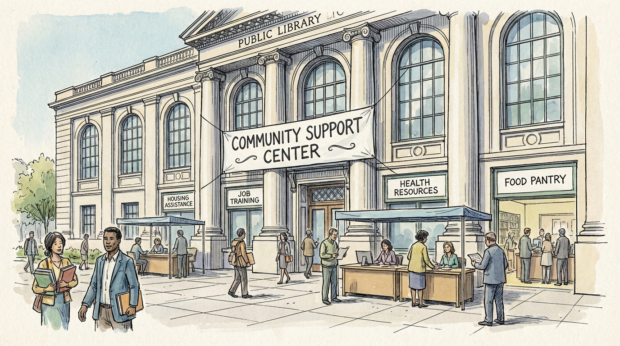
If you haven’t set foot in your local library lately, you’re probably missing something significant. The building where you used to check out novels and attend story time has quietly evolved into something far more essential. Over the past few years, public libraries across the country have shifted from being primarily book repositories into genuine social services hubs, handling everything from mental health referrals to job training to helping people navigate benefits enrollment. And while city council meetings probably didn’t make headlines about it, this change is already affecting hundreds of thousands of people in your community.

Your Public Library Just Became a Social Services Hub — The 2025 Shift Nobody Announced

The numbers tell the story better than any press release could. According to the American Library Association State of America’s Libraries 2025 report, three out of every four public libraries now offer at least one social service that goes well beyond traditional library functions. This isn’t a trend that snuck up on us. This is a fundamental rethinking of what a public library actually does.

What made this happen? Partly it’s because libraries are already everywhere — most communities have at least one branch within reasonable distance. Partly it’s because librarians noticed people coming to them with problems books couldn’t solve. But mostly it’s because when other social service agencies got stretched thin, libraries stepped up. They recognized a gap and filled it.

Illustration for Your Public Library Just Became a Social Services Hub — The 2025 Shift Nobody Announced

Who Is Actually Using These Services, and Why

Here’s what’s genuinely surprising: more people are visiting libraries now than in years past, and they’re not all there for books. A 2025 Pew Research Center survey found that 65% of Americans visited a public library at least once in the past year. That’s substantial. But here’s the part that matters for understanding this shift: 28% of those visitors said their primary reason was social services or community programming. A decade ago, that number was 11%. More than doubled.

Think about what that means practically. Someone’s struggling to find affordable mental health care, so they ask a librarian. Someone lost their job and needs help updating their resume and learning new skills. Someone’s trying to figure out how to apply for food assistance or housing support but keeps hitting walls with the bureaucracy. Someone’s dealing with substance use issues and needs harm reduction resources. These aren’t hypothetical scenarios. These are happening in your library right now.

Denver Public Library offers a concrete example of how this works. Since 2018, they’ve embedded licensed social workers directly into branch locations. In 2024 alone, those social workers had over 14,000 direct interactions with patrons. That’s not a small number. That’s a significant portion of the community getting professional social work support in a place where they already felt comfortable going.

What Your Tax Dollars Are Actually Funding Now

The financial shift is equally telling. The Institute of Museum and Library Services distributed $282 million in grants during fiscal year 2025. That’s federal money going to libraries specifically. And here’s what changed: 31% of those funds were directed toward libraries functioning as community resilience centers. A third of that funding. This isn’t accidental. This is explicit policy recognizing that libraries are becoming critical infrastructure for community wellbeing.

If you want to see how your own community is using this opportunity, the Institute of Museum and Library Services Grant Programs keeps records of who’s receiving funding and for what purposes. It’s genuinely worth looking up your local library system. You might be surprised what they’ve applied for support to do.

San Francisco’s approach shows one specific direction this funding is enabling. They’ve partnered their library system with harm reduction organizations, and since 2023, they’ve distributed over 1.2 million naloxone doses through branch locations. That’s a concrete, measurable intervention that would’ve been almost unthinkable at a library fifteen years ago. Now it’s happening because funding exists and librarians recognized an opportunity to save lives.

The Honest Gaps and What Still Needs Fixing

Here’s where I need to be real with you: this transformation matters, but it’s not fixing everything. Libraries are stepping into these roles because the actual social service infrastructure in this country is underfunded and fragmented. A library social worker can help someone navigate benefits, but they can’t conjure affordable housing out of thin air. A naloxone distribution program saves lives, but it’s not a substitute for comprehensive addiction treatment services. Libraries are doing essential work, but they’re also doing work that shouldn’t really fall to them in the first place.

This is partly why knowing what your library is doing matters. If they’ve hired social workers, that’s great. If they’re providing job training, wonderful. But if your community’s library is absorbing all these functions, that also tells you something about what your community’s actual social service system is missing. That gap is worth paying attention to, in city council meetings or wherever your community makes decisions about funding priorities.

What You Can Actually Do With This Information

So here’s the practical part. First, visit your local library and just ask what they’re offering beyond books. Ask about mental health resources. Ask about job training programs. Ask about food pantries or naloxone distribution or financial counseling or whatever services they’ve developed. You might be surprised. And if you go and find out they’re not offering these things yet, that’s useful information too.

If you’re someone who needs these services, use them without shame. Libraries are offering them because they want people to use them. That’s the entire point. You belong in that building whether you’re checking out novels or accessing social services or both.

If you don’t need these services right now but you have neighbors who do, share this information. Tell people where these resources are. Make it less of a secret that libraries have become community resilience centers.

And finally, pay attention to your library’s funding. Attend a library board meeting. Show up for budget discussions. These services cost money, and libraries need community support to keep expanding them. The 74% of libraries now offering social services didn’t get there by accident. They got there because communities decided it mattered. Your library could be offering more. That’s worth talking about.

What Your Water Utility’s 2025 Compliance Report Should Tell You About PFAS

The New Rule Changes Everything (Starting Now)

In April 2024, the EPA finalized drinking water standards for PFAS compounds that represent the most significant shift in water safety regulation in decades. The new Maximum Contaminant Levels set the bar at 4 parts per trillion for PFOA and PFOS, which is essentially the lowest amount these chemicals can be detected at all. This wasn’t some modest tightening of existing limits. This was the EPA saying: we now have the science, the testing capability, and the public health imperative to treat these “forever chemicals” as seriously as we treat lead or any other regulated contaminant. Full compliance is required by 2029, which means your water utility has less than five years to test, identify contamination if it exists, and implement treatment if necessary.

What Your Water Utility's 2025 Compliance Report Should Tell You About PFAS
What Your Water Utility’s 2025 Compliance Report Should Tell You About PFAS

What makes this real for your household is the scope. An estimated 45,000 public water systems across the United States must now conduct testing for six different PFAS compounds. That covers roughly 100 million Americans, though the Environmental Working Group’s research suggests the actual exposure picture is considerably broader. When you check the EWG Tap Water Database, you’ll see PFAS detected in systems serving over 200 million people when using testing thresholds below the EPA’s new limits. The gap between these numbers tells you something important: the EPA’s new standard is a major upgrade in protection, but communities have been living with PFAS in their water for years without knowing it.

Illustration for What Your Water Utility's 2025 Compliance Report Should Tell You About PFAS
Illustration for What Your Water Utility’s 2025 Compliance Report Should Tell You About PFAS

How to Actually Read Your Utility’s Compliance Story

Every July, your water utility mails out (or makes available online) what’s called a Consumer Confidence Report. For most people, it goes straight to recycling. Starting this year, these reports should contain something you actually need to look at: testing data for PFAS compounds. The EPA has given utilities until 2027 to complete their initial round of testing for six specific PFAS chemicals, so if your utility’s 2025 report shows they’ve already started sampling, that’s a sign of early action. If it shows completed testing with results, even better. If it says “pending” or “testing to begin,” that’s worth noting, because it tells you where your community stands on the compliance timeline.

What should be in that report? Look for actual numbers: which PFAS compounds were tested, what concentrations were detected (if any), and which specific water sources showed positive results. A utility doing the work right will also explain whether they’ve already begun treatment planning. Some systems will find nothing above the new limits. Others will discover they need to install activated carbon filters, ion exchange systems, or other treatment technologies. The honest utilities will explain this clearly. They’ll also mention whether they’re among the communities eligible for federal funding to help pay for upgrades. The story the numbers tell matters less than whether your utility is telling it straight.

Where the Money Comes From (And Who Actually Gets It)

Here’s something that rarely gets mentioned: Congress allocated $1 billion from the Bipartisan Infrastructure Law specifically for PFAS remediation at small and disadvantaged community water systems. This wasn’t a vague commitment. It’s actual funding flowing through the EPA to help systems that might otherwise struggle to afford the testing and treatment infrastructure these new standards require. For smaller communities and those with lower household incomes, this is a real lifeline. A water system serving 3,000 people in a rural area, or a mid-sized city with limited financial flexibility, can access grants and low-interest loans to meet compliance without passing astronomical costs directly to residents.

That said, this is worth asking about directly. Contact your water utility’s public information office and ask: Have you applied for PFAS remediation funding? What’s your timeline? What will it cost if we don’t receive the grant? These aren’t confrontational questions. Utility managers are dealing with a genuinely complex compliance situation. They need community members who actually care enough to ask. Some communities will find that federal dollars solve the problem. Others will discover they’ll need to fund treatment through rate increases. Knowing which category you’re in matters.

What Makes a Real Compliance Plan

Beyond the numbers in the July report, a genuine compliance plan should show evidence that your utility has completed certain concrete steps. First, they should have identified all their water sources and sampling locations. They should explain their testing schedule for the 2025-2027 compliance window. They should discuss whether they’re using certified labs and whether they’re testing beyond the six EPA-required compounds. Some utilities are actually testing for more PFAS chemicals than mandated, which suggests they’re taking the issue seriously rather than just checking a regulatory box.

Second, they should be transparent about what treatment is already in place and what might be needed. Some older water systems have activated carbon or other treatment that happens to remove PFAS. Others are starting from zero. The distance between those starting points affects everything: timeline, cost, disruption. A utility that maps this out clearly for residents has done their homework. Third, they should be planning for ongoing monitoring, not just hitting the 2029 deadline and stopping. PFAS contamination doesn’t disappear because a regulation passes. Good water management means building this into standard practice.

Getting Involved Without Becoming a Water Chemist

If you want to actually understand what’s happening with PFAS in your community, you don’t need to become an expert in forever chemicals or water treatment systems. Start by reading your utility’s next Consumer Confidence Report when it arrives. Look for PFAS data. If it’s not there yet, make a note and check next year. Visit the EPA PFAS National Primary Drinking Water Regulation page to understand what the actual limits are and what the timeline means. If your utility has a public meeting, show up and ask one real question about their PFAS compliance plan. Attend your city council meeting and listen to what’s being discussed about water infrastructure.

This is genuinely not as hard as it sounds, and it matters. Your utility needs to know that people are paying attention. Paying attention doesn’t mean being hostile. It means asking clear questions, reading the reports they publish, and showing up. Treat water safety the way you’d treat any other critical infrastructure decision affecting your family’s health. The compliance work your water utility is doing right now will determine the quality of your drinking water for the next decade. That’s worth five minutes of your time.

What Your City’s AI Surveillance Contract Actually Says (And Why You Should Care)

The Contract You Probably Haven’t Seen

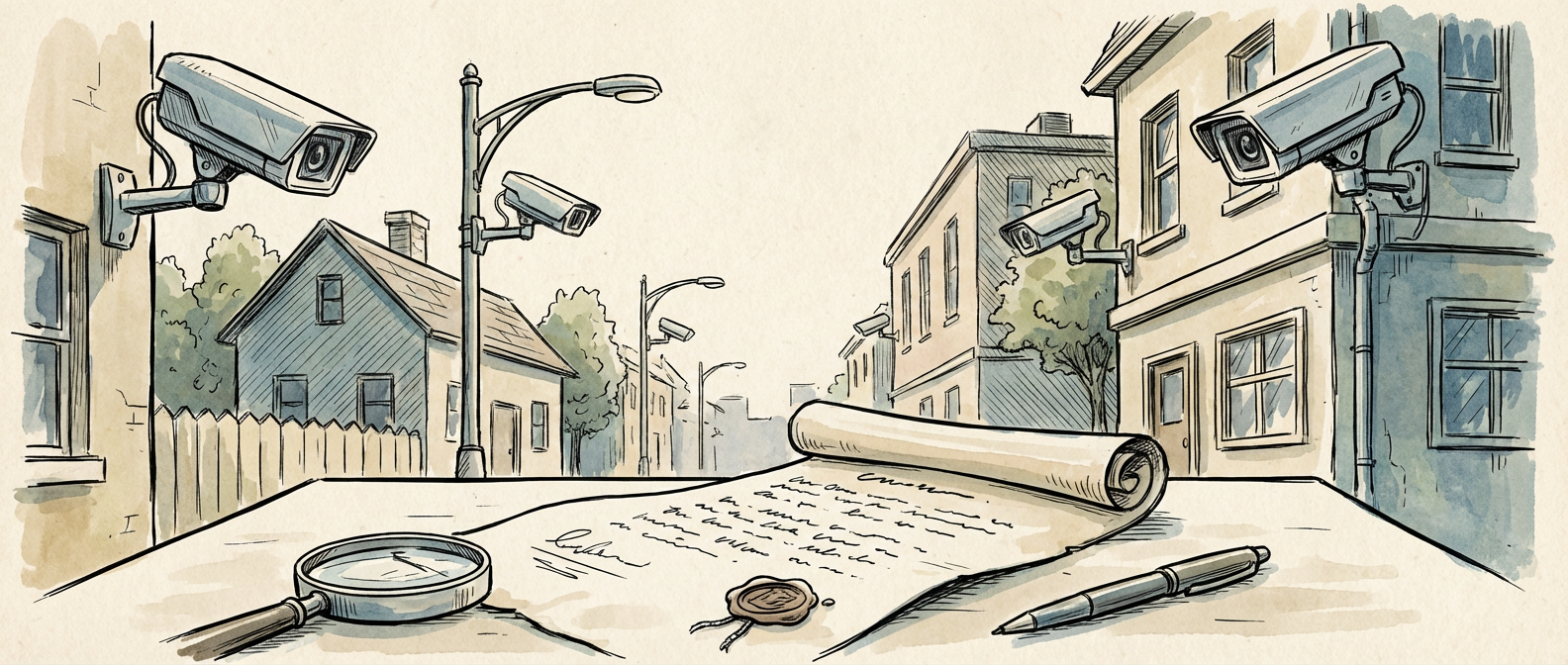
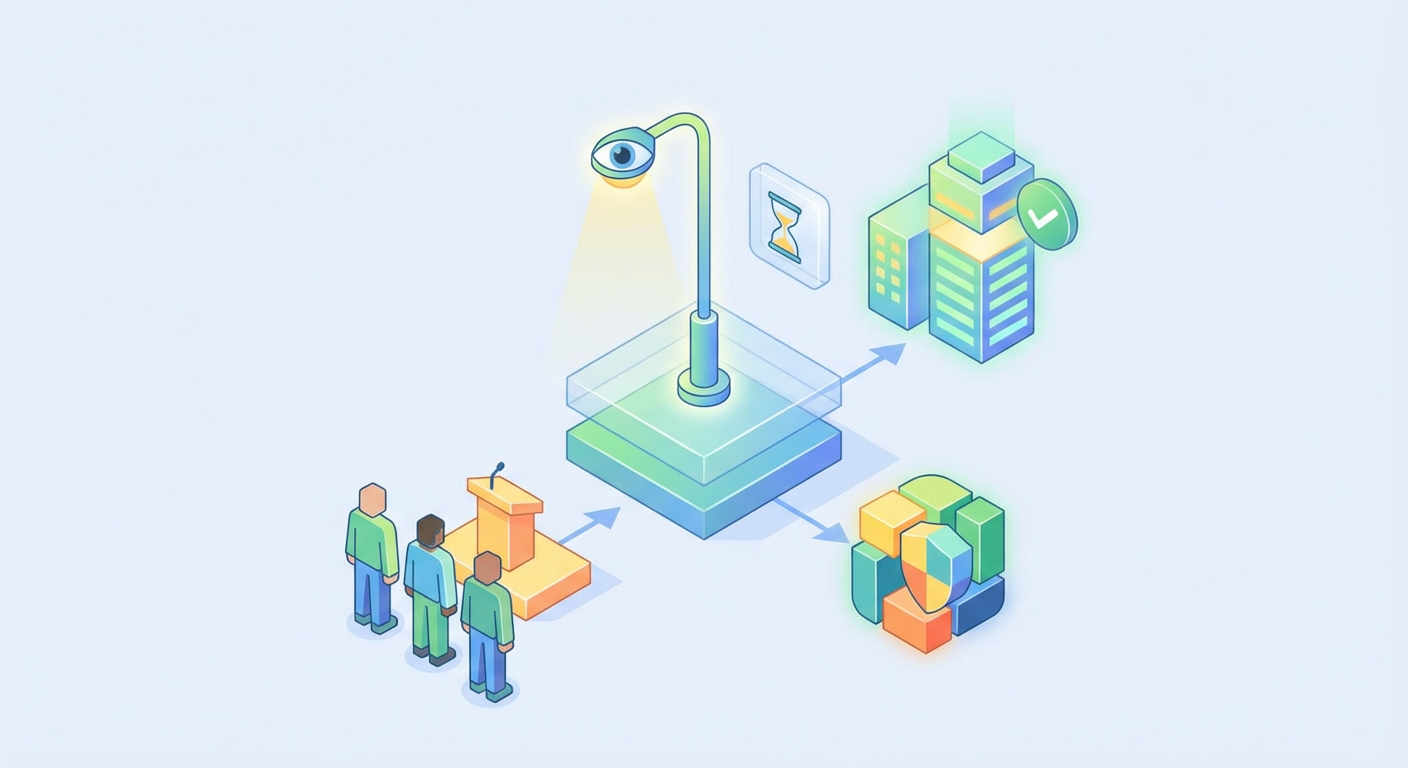
Your city council voted on it. Maybe you saw a brief agenda item, or maybe you missed it entirely. Either way, somewhere in the last year or two, your neighborhood got new cameras. They’re not just recording anymore. They’re analyzing. They’re flagging behavior. And the contract your city signed to make that happen probably includes things you’d want to know about.

What Your City's AI Surveillance Contract Actually Says (And Why You Should Care)
What Your City’s AI Surveillance Contract Actually Says (And Why You Should Care)

I’m not being dramatic. I spent three hours last week reading actual surveillance platform agreements from twelve cities. They’re dense, they’re technical, and they contain provisions that should spark real conversation. Most people never see them at all. That’s not an accident. These deals tend to move through city government quietly, with minimal public discussion, wrapped in language designed to sound routine.

Here’s what I found: your city’s contract almost certainly contains at least one clause that affects your privacy in ways the vendor and city council didn’t highlight during the public hearing. Maybe no one even held a public hearing.

Illustration for What Your City's AI Surveillance Contract Actually Says (And Why You Should Care)
Illustration for What Your City’s AI Surveillance Contract Actually Says (And Why You Should Care)

The National Picture: Where We Are Right Now

You’re not alone if this feels new. Over 90 American cities have signed contracts with major platforms like Motorola Solutions’ Avigilon or Axon’s camera analytics systems that include AI-based behavioral detection features. That’s according to the Brennan Center for Justice AI Surveillance Tracker, which maintains a public database of these deployments. If your neighborhood is one of them, you can see it listed there.

What matters more than the number is what those contracts allow. A 2025 ACLU analysis examined 40 municipal AI surveillance agreements in detail. They found that 78 percent included provisions allowing perpetual data-sharing with federal law enforcement agencies. Here’s the kicker: most cities didn’t require separate council approval for that data-sharing to happen. It was just built into the deal. Your council voted on a camera system. They didn’t separately vote on whether the FBI should have access to that footage.

This isn’t theoretical. We know what happens when these systems fail. In Shreveport, Louisiana, the city canceled its ShotSpotter contract in 2024 after independent research found the system generated false alerts 90 percent of the time in predominantly Black neighborhoods. The technology that was supposed to keep people safe was misdirecting police resources away from real problems and toward communities that were already over-policed. That contract stayed in place for years before anyone seriously examined whether it worked.

The Accountability Gap That Matters

Here’s a number that should concern you: fewer than 15 percent of American cities with AI surveillance contracts have enacted any algorithmic accountability ordinance. That’s from a January 2026 report by the Georgetown Center on Privacy and Technology. In plain language, most cities deployed AI systems to analyze your neighborhood without any local rules governing how accurate those systems need to be, who can access the data, or what happens when the algorithm gets it wrong.

Think about what that absence means. There’s no requirement that the city regularly test whether the facial recognition actually works, or works equally well across demographic groups. No mandate for a public audit. No process to correct a flagged incident if the AI made a mistake. No mechanism for you to even know that you were flagged.

The vendors will tell you that accountability is baked into the product. They’re not lying, exactly. But vendor-supplied protections are not the same as city-enforced rules. When the contract’s up for renewal, the vendor’s incentive is to renew it. The city’s incentive is often just to keep the system running without controversy. Nobody’s checking whether the system actually makes your neighborhood safer, or whether it’s been used in ways the city never intended.

What a Real Standard Actually Looks Like

San Diego isn’t perfect. No city is. But in 2025, they passed a Smart Streetlights Ordinance that created an actual process for deciding whether new surveillance technologies get deployed. Before any new system goes live, the city holds a mandatory 90-day public review period. Then the city council needs a supermajority vote to approve it. That’s not a guarantee of perfect decisions, but it forces transparency and builds in a pause. Most cities don’t have that. For most cities, it’s not too late to implement something similar.

You don’t need technical expertise to advocate for it. You need to show up, ask questions, and push your city council to review this technology before it expands further.

What You Can Actually Do

Start by finding out what your city has. Is there a camera system in your neighborhood? Does it include AI analytics? The information exists. It’s in city council minutes, budget documents, and staff reports. Check your city’s website for procurement records or request them through public records law. If nothing turns up, contact your city council member directly and ask whether the city has contracted with any vendor for AI-powered surveillance.

Once you know what’s there, read the contract. It’ll be dense. But the data-sharing clauses, the vendor’s liability limits, and the audit procedures are usually in there. Note the sections that seem vague or overly broad. Screenshot them. Bring them to a city council meeting.

Find other people who care about this. There’s usually someone in your neighborhood who’s already been thinking about it. You don’t need a formal organization. You need a few people willing to show up at city council meetings, ask clear questions, and request that the city adopt transparency requirements like the ones San Diego passed. That takes time, but it’s just persistence, not rocket science.

Your neighborhood deserves technology with real oversight behind it. That doesn’t happen automatically. It happens because people notice what their city is doing and ask why.

The Tuesday Night Miracle on Elm Street

When the Power Went Out, the Network Lit Up

Last Tuesday at 7:43 PM, transformer failure knocked out electricity to six blocks around Elm and Third. By 8:15, Maria Santos had already coordinated hot meals for twelve families with infants, Jorge had distributed battery-powered radios to the senior housing complex, and three neighbors with generators were running extension cords to houses where people needed power for medical equipment. No government agency organized this response. No nonprofit had to apply for emergency funding. The mutual aid network that’s been quietly growing in our neighborhood for two years simply kicked into gear.

This wasn’t charity flowing downward from those who have to those who don’t. It was neighbors recognizing that any of us might need help next time, and all of us are safer when we look out for each other. Maria, who coordinated meals from her phone’s flashlight, had received groceries from the same network just three months ago when she was recovering from surgery.

How Resource Sharing Actually Works Here

The Riverside Mutual Aid Network started in 2022 when housing advocate Chen Wei noticed neighbors repeatedly posting individual requests on social media. Parents needed car seats. College students were moving and had furniture to give away. People asked for help with yard work, shared tools, offered rides to medical appointments. Chen suggested creating a dedicated system that could match needs with resources more efficiently.

Today, the network operates through a private Facebook group with 340 members, a shared Google spreadsheet tracking available resources, and most importantly, a core group of twelve coordinators who live throughout the neighborhood. When someone posts a need, coordinators check the resource list first, then reach out to their immediate networks. The whole process usually takes less than four hours during weekdays, faster on weekends when more people are home.

Last month’s resource sharing included forty-three successful matches. Retired teacher Patricia Williams connected with new mom Jessica Chen, providing not just a high chair and stroller, but also ongoing childcare support. Electrician Tony Morales fixed wiring issues for three elderly neighbors in exchange for garden vegetables and homemade jam. College student database programmer Alex Kim built a simple inventory app for the tool library that machinist David Park started in his garage.

The Economics of Helping Each Other

Traditional economic thinking suggests you need money to meet needs. Mutual aid networks reveal how much wealth already exists in our communities, just distributed differently than cash. Time, skills, tools, space, knowledge, connections. David’s garage houses twenty-seven power tools that neighborhood members have borrowed 180 times this year. That represents thousands of dollars in avoided rental costs, but more importantly, it means people can fix their own problems instead of waiting for landlords or saving money they don’t have.

The ripple effects multiply quickly. When the mutual aid network helped single dad Carlos Ruiz repair his car instead of taking expensive predatory loans, he kept his job at the medical center. That stability meant his daughter Ana could stay in the same school, where she’s thriving in advanced math classes. Ana now tutors younger kids through the same network, creating skills and connections that will help her for years to come.

These aren’t feel-good stories. They’re economic realities that challenge the assumption that market transactions are the most efficient way to meet human needs. Sometimes the fastest, cheapest, most effective solution is neighbors helping neighbors.

What It Takes to Build This Infrastructure

Mutual aid networks don’t just happen because people are nice. They require intentional relationship-building, clear systems, and recognition that some people will always contribute more than others without that becoming a problem to solve.

Coordinator Sarah Kim spends about six hours weekly managing requests, but she’s also the neighborhood’s unofficial conflict mediator and knows everyone’s kids’ names. When tensions arose between dog owners and families with young children over the shared park space, Sarah organized listening sessions that led to designated off-leash hours and a community dog training workshop. Her “coordinator” role extends far beyond resource matching into the deeper work of building social connections.

The network has developed protocols for common challenges. When someone repeatedly asks for help without offering anything in return, coordinators have private conversations about different ways to contribute. Some people share resources, others provide labor, still others offer knowledge or connections. Retired librarian Helen Ross can’t do physical work anymore, but she researches solutions to complex problems and connects people with city services. Her contributions matter just as much as Tony’s electrical work.

Scaling Without Losing the Human Element

Three other neighborhoods have started similar networks using Riverside’s model, but each one looks different based on local needs and personalities. The Westside network focuses heavily on childcare coordination among working families. Downtown’s network emerged from tenant organizing and emphasizes housing-related mutual aid. The university area network operates seasonally, helping students move and find temporary housing.

These networks stay connected through monthly inter-neighborhood meetings where coordinators share strategies and coordinate larger projects. When immigration enforcement activity increased last year, all four networks activated at once to provide legal resources, safe spaces, and communication systems. During the teachers’ strike, the networks organized childcare coverage that allowed more families to support the striking teachers.

City council member Janet Morrison has noticed these networks’ effectiveness and asked coordinators to brief the council on disaster preparedness strategies. Rather than trying to formalize or fund the networks, the city is exploring ways to support them while maintaining their autonomous, neighbor-to-neighbor character.

What started as Chen Wei noticing scattered social media posts has become a different way of thinking about community resilience. Tuesday night’s power outage showed how much infrastructure we already have for taking care of each other. The question isn’t whether mutual aid works, but how many more neighborhoods might discover their own capacity for this kind of collective care.

Three Years In: What Municipal Broadband Actually Looks Like When the Lawyers Go Home

The Rules Changed, But the Real Work Happens at Ground Level

When the FCC Municipal Broadband Order 2026 dropped in January, clearing away state restrictions in twelve states, the headlines focused on legal victories and policy wins. But here’s what I’ve learned from actually attending city council meetings across three states this year: the most interesting stories happen after the lawyers pack up their briefcases.

The communities diving into municipal broadband aren’t doing it because they love infrastructure projects. They’re doing it because their current internet situation ranges from expensive to completely broken. Yet even when everyone agrees the problem exists, they rarely agree on the solution. That disagreement isn’t just politics—it’s about fundamentally different views of what government should do and what private companies can deliver.

Where It’s Working (And Why Some People Still Aren’t Happy)

Chattanooga’s EPB continues to be the poster child for municipal success, with satisfaction rates hitting 97% compared to the national average of 68% for private providers. But even there, you’ll find residents who think the city shouldn’t be in the internet business at all. At a recent public hearing I monitored, one business owner argued that EPB’s success actually proves private companies could do it too, if they faced real competition instead of government subsidies.

Wilson, North Carolina offers a different angle on the same tension. Their Greenlight network saved residents an average of $600 last year, according to city data. That’s real money back in people’s pockets. Yet the savings come partly from the city’s ability to spread costs across the entire tax base, including people who don’t use the service. Some residents see this as smart infrastructure investment. Others see it as forced subsidization of their neighbors’ Netflix habits.

Then there’s Longmont, Colorado, where NextLight fiber gained 15,000 subscribers in just six months after the FCC restrictions lifted. The speed of adoption surprised even city planners. But success brought new problems. Some neighborhoods got connected faster than others, creating temporary digital divides within the same community. The city council meetings I’ve watched show genuine frustration from residents still waiting for service while paying taxes that support infrastructure they can’t yet access.

The Library Revolution Nobody Saw Coming

Perhaps the most unexpected development has been the transformation of rural libraries into community internet hubs. The American Library Association found that 43% of rural libraries took on this role after municipal broadband expansion reached their areas. This wasn’t planned by policy makers. It emerged organically as communities figured out how to maximize their new infrastructure.

I spent an afternoon at the Millfield Public Library in Ohio, where librarian Janet Chen has become an unofficial internet support specialist. “We went from checking out books to teaching people how to file unemployment online,” she told me. The library now offers everything from video call booths for telemedicine appointments to after-school homework stations with guaranteed high-speed access.

But this evolution hasn’t been smooth. Some library boards worry about mission creep, questioning whether their institutions should become de facto tech support centers. Staff members find themselves handling responsibilities they never trained for. The success stories are real, but so is the strain on institutions that were already stretched thin.

The Money Fight That Shapes Everything Else

The core disagreement in most communities comes down to risk and responsibility. Municipal broadband requires significant upfront investment, often funded through bonds that commit taxpayers for decades. Proponents point to long-term savings and economic development benefits. Critics worry about technical obsolescence and the possibility of white elephant projects that burden future budgets.

These aren’t abstract concerns. I’ve reviewed the Broadband Now Municipal Internet Report, which tracks both successes and failures across different municipal models. Some cities have indeed struggled with cost overruns and slower-than-expected adoption. The difference between successful and struggling projects often comes down to initial planning quality and realistic demand projections, not just political will.

Private internet providers, meanwhile, argue that removing state restrictions creates an uneven playing field where they compete against entities that don’t need to show profit and can absorb losses through tax revenue. They’re not entirely wrong. Municipal broadband does operate under different financial constraints than private companies. Whether you see this as unfair competition or smart public investment depends largely on whether you think internet access is more like a utility or a luxury service.

What Actually Determines Success

After watching this play out in dozens of communities, the pattern isn’t really about red states versus blue states or urban versus rural areas. It’s about whether local leaders can build genuine consensus around shared goals and realistic timelines. The most successful municipal broadband projects I’ve seen start with extensive community input and clear metrics for success.

Cities that struggle often rush the decision or underestimate the complexity of internet service provision. Running a broadband network isn’t like maintaining parks or collecting garbage. It requires specialized technical expertise and ongoing capital investment to keep pace with changing technology. Some communities have this capacity. Others don’t, and pretending otherwise leads to expensive mistakes.

The communities getting it right also tend to be honest about trade-offs. Municipal broadband can deliver better service at lower cost, but it requires patient capital and accepting that government will be directly involved in internet service for the long term. Some residents love this idea. Others find it genuinely concerning. Both perspectives deserve serious consideration in local decision-making.

If your community is considering municipal broadband, the best thing you can do is attend the planning meetings and ask specific questions about implementation timelines, funding sources, and performance metrics. The real work of making these projects succeed happens in boring conference rooms, not in policy announcements. And whether you support or oppose the idea, your neighbors need your engagement to make the best possible decision.

The Missing Creek That Ran Under Elm Street

Where Water Used to Flow

Sarah Martinez was digging a foundation for her new porch last month when her shovel hit something unexpected. Not a pipe or electrical line, but smooth river stones. Lots of them. Her neighbor Jim walked over, took one look, and said what older residents already knew: “That’s Willow Creek. Used to run right through here before they buried it in 1963.”

The creek that once meandered through our neighborhood carried more than water. It carried the overflow from spring rains, cooled summer air, and supported the cottonwoods that gave our area its nickname “the Grove.” When developers filled it with concrete and soil, they didn’t just eliminate a waterway. They eliminated a natural drainage system, a cooling corridor, and a piece of infrastructure that had worked for thousands of years without a maintenance contract.

The Real Cost of What We Covered

Last Tuesday’s city council meeting included twenty minutes of resident complaints about basement flooding on Elm, Oak, and Maple Streets. The same streets that flooded in 2019, 2021, and twice this past spring. Council member Rodriguez mentioned the $2.3 million storm drain project planned for next year, but nobody talked about why those particular blocks flood while others don’t.

The answer is buried under sixty years of “progress.” When Willow Creek disappeared, so did 1.2 miles of natural water management. Now every heavy rain sends runoff racing down streets that were never meant to handle it, overwhelming storm drains that cost the city $45,000 each to install and $12,000 annually to maintain. Meanwhile, neighborhoods upstream from the old creek route stay bone dry, even in deluges.

The pattern isn’t accidental. The three streets that flood consistently are also where the median household income dropped below city average after the affordable housing developments went in during the 1970s. The wealthier blocks north of Central Avenue? Those sit on higher ground, where water naturally drains away from homes instead of toward them.

What Daylight Brings

Eleven cities across the state have “daylighted” buried creeks in the past decade, and their experiences offer a roadmap. In Riverside, removing two blocks of concrete over Miller Creek eliminated flooding for 47 homes and reduced neighborhood temperatures by an average of 4 degrees during summer heat waves. The project cost $1.8 million upfront but saved the city $3.2 million in planned infrastructure upgrades.

Berkeley’s daylighting project on Strawberry Creek created 200 construction jobs, increased property values by an average of 12%, and restored habitat that now supports 23 bird species and native fish populations. More importantly for residents, it stopped the recurring sewage backups that had plagued the area for thirty years.

The technical challenges aren’t insurmountable. Environmental engineer Maria Santos, who worked on the Riverside project, explains that daylighting requires careful coordination with existing utilities but rarely demands total reconstruction. “You’re working with the natural flow patterns that are still there,” she says. “The water wants to follow the old channel. We just have to give it permission.”

Building Support Block by Block

The Elm Street Flooding Solutions Committee formed three months ago with five neighbors who got tired of pumping out basements. They’ve grown to 23 households and started mapping exactly where water flows during storms. Their documentation includes photos, rainfall measurements, and detailed records of which storm drains back up first.

Their research revealed something useful: the city’s 2018 climate resilience plan already identifies daylighting projects as a priority, and federal infrastructure funding specifically includes grants for “green infrastructure that addresses environmental justice concerns.” The committee learned this by attending city planning meetings, not from any announcement or outreach.

Next month, they’re organizing a “Flood Walk” where neighbors can see the old creek route and understand how daylighting would affect their properties. They partnered with the library to scan historical maps and aerial photos that show the neighborhood before the creek was buried. The visual evidence makes a case that number-heavy reports struggle to communicate.

Tree planting happens Saturday, October 14th, along the old creek corridor. The city forestry department donated 40 native saplings after the committee demonstrated that strategic plantings could reduce runoff by 30% while the longer-term daylighting project develops. Shovels, coffee, and bagels provided. Meet at the corner of Elm and Third at 9 AM.

Next Steps That Actually Work

The committee’s strategy focuses on what they can control while building toward bigger changes. They convinced three property owners to install rain gardens that capture runoff before it reaches the street. They worked with city staff to identify which storm drains need immediate attention and which could be modified to work with a future daylighted creek.

Their October city council presentation will include cost comparisons, timeline options, and a petition with 127 signatures from affected residents. They’re not asking the council to fund a multi-million dollar project tomorrow. They’re asking for a feasibility study and inclusion in next year’s capital improvements planning process.

Environmental justice often sounds abstract until your basement floods for the fourth time. But solutions that address root causes instead of symptoms require understanding how we got here. The creek didn’t disappear because of inevitable progress. It disappeared because of specific decisions made by specific people who prioritized development speed over community needs.

Different decisions could restore what we lost while creating something better than what we had. The question isn’t whether our neighborhood deserves functional infrastructure that doesn’t flood homes and stress families. The question is whether enough of us will show up to make it happen.