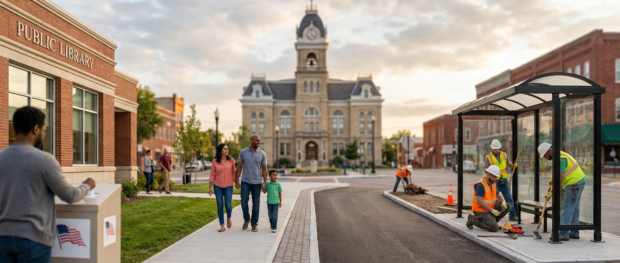
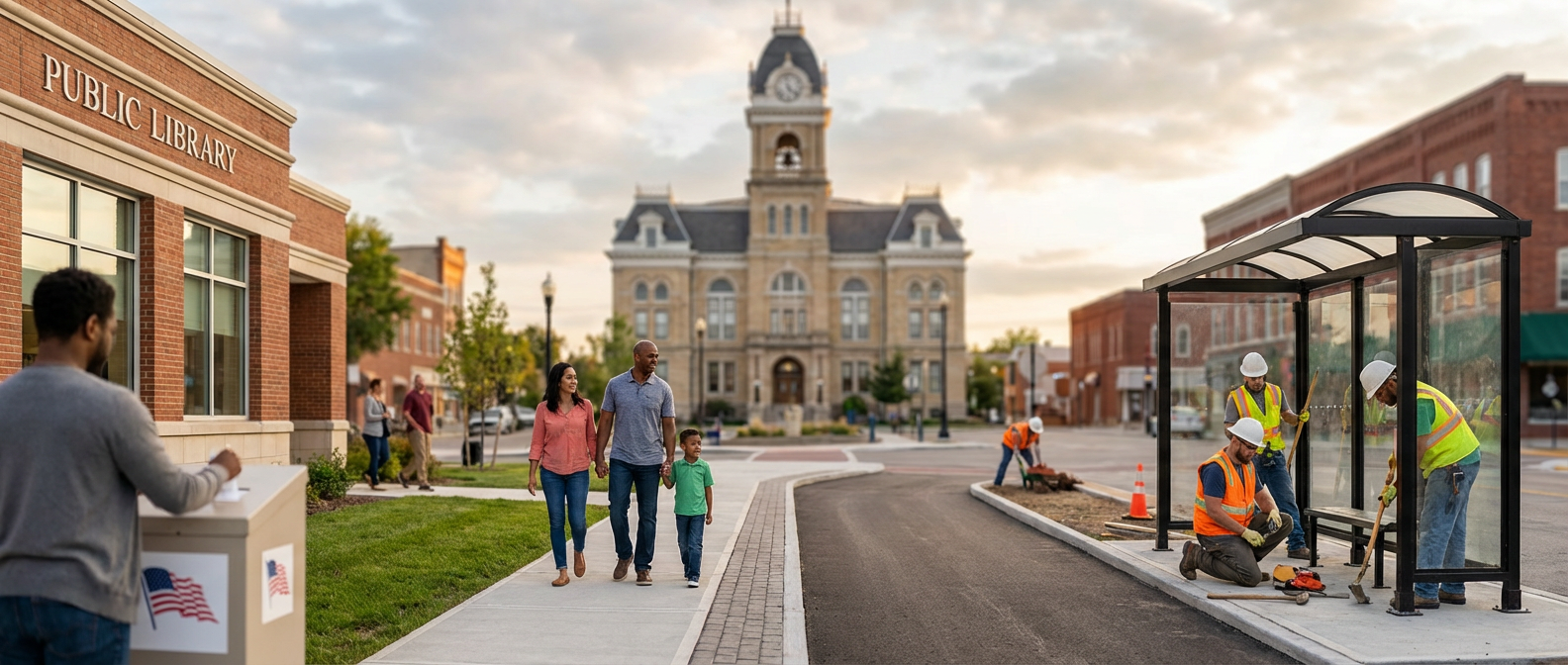
Your City Council Actually Controls More of Your Daily Life Than You Think (And Here’s How to Track What Matters)

The Decisions That Hit Your Wallet First

Last Tuesday, while most of us were arguing about coffee prices on social media, the city council voted to increase water rates by 12% and approved a new fee structure for building permits that will add roughly $800 to any home renovation project. These aren’t abstract policy decisions. If you’re planning to add a deck this summer or your monthly utility bill already makes you wince, these votes directly changed your financial reality.

Your City Council Actually Controls More of Your Daily Life Than You Think (And Here's How to Track What Matters)
Your City Council Actually Controls More of Your Daily Life Than You Think (And Here’s How to Track What Matters)

The tricky part is that local government decisions often get buried in bureaucratic language that makes your eyes glaze over. “Infrastructure maintenance assessments” and “development impact fees” sound boring, but they mean real money leaving your bank account. Here’s what I’ve learned about tracking these decisions.

Check your city’s online agenda portal first. Most cities post council meeting agendas at least 72 hours ahead of time. The items hitting your wallet usually show up under budget discussions or public works. Watch for words like “rates,” “fees,” “assessments,” and “capital improvements.” When you see these, pay attention.

Illustration for Your City Council Actually Controls More of Your Daily Life Than You Think (And Here's How to Track What Matters)
Illustration for Your City Council Actually Controls More of Your Daily Life Than You Think (And Here’s How to Track What Matters)

The Permits and Regulations That Shape Your Neighborhood

Remember that corner lot that’s been empty for three years? Or the new apartment complex that seemed to appear overnight? Those changes happened because of zoning decisions and development permits approved months or even years earlier by your local planning commission and city council.

These land use decisions don’t just affect property values. They determine whether you’ll have a new gas station next to the elementary school, if that historic building gets demolished for condos, or whether the new development includes affordable housing units. The problem is that by the time construction starts, the window for public input has usually closed.

Your city’s planning department website typically has a map of current development proposals and zoning changes. Some cities have gotten better about this. Ours now sends email alerts for proposed developments within a quarter-mile of your address if you sign up. It’s not perfect, but it beats finding out about a major project when the bulldozers arrive.

The most important meetings often happen during planning commission sessions, which typically occur before city council votes. These meetings have smaller crowds and more detailed discussions about specific projects. If you care about what gets built in your neighborhood, this is where your voice matters most.

Transportation and Infrastructure: When Your Commute Gets Complicated

That pothole you’ve been dodging for six months? The intersection where the signal timing makes no sense? The bike lane that just ends randomly? All of these come from transportation planning decisions that happen in city council chambers, often buried in consent calendars that get approved without discussion.

Local transportation decisions affect your daily routine in ways that aren’t always obvious until they’re already implemented. Street maintenance schedules, traffic signal timing, parking regulations, and bus routes all flow from council decisions about budget priorities and infrastructure planning.

Most cities publish annual capital improvement plans that outline major infrastructure projects for the next five years. These documents tell you when your street might finally get repaved or if that dangerous intersection will get a proper signal. The plans don’t always get followed exactly, but they give you a realistic timeline for improvements.

For real-time updates, many cities now use apps or online portals where residents can report problems and track repair status. These systems aren’t perfect, but they’re usually more effective than calling city hall and hoping your complaint gets routed to the right department.

Public Safety and Services: What Really Gets Prioritized

Police and fire department budgets eat up huge portions of most city budgets, but the interesting decisions often happen around the edges. How many officers patrol your neighborhood versus downtown? Which parks get regular maintenance and which ones get neglected? How quickly does animal control respond to calls in different parts of town?

These service-level decisions rarely make headlines, but they seriously impact quality of life. The council member who pushes for more frequent street sweeping in residential areas or fights for extended library hours is making decisions that affect your daily experience of living in the city.

Budget season, typically in late spring or early summer, gives you the best window into these priorities. Most cities hold multiple budget hearings where department heads present their requests and council members ask questions about service levels. These meetings can be long and tedious, but they reveal what your local government actually values versus what they say they value in press releases.

Don’t overlook the consent calendar items that get approved without discussion. These often include contracts for services like park maintenance, road repair, and public safety equipment. While individual contracts might seem small, they add up to show clear patterns about where money flows and which neighborhoods get attention.

How to Stay Informed Without Losing Your Sanity

Following local government doesn’t require becoming a political junkie or attending every meeting. The key is building a system that catches the decisions that actually affect your life without drowning you in procedural details.

Start with your city’s email newsletter and council meeting agendas. Scan agenda items for keywords that matter to you: your neighborhood name, streets you use regularly, services you rely on, or issues you care about. Most agenda items include brief descriptions that help you decide whether the full discussion deserves your attention.

Local news coverage of city government has gotten sparse in many communities, but neighborhood social media groups and apps like Nextdoor often fill the gap with real-time updates about city decisions. The information isn’t always accurate, but it can alert you to issues worth investigating through official channels.

Consider connecting with one or two city council members whose priorities align with yours. Most council members genuinely want to hear from constituents, and a brief email expressing your views on upcoming votes often gets read and considered. You don’t need to become a regular at city hall to have influence on decisions that affect your daily life.

The next city council meeting is this Thursday at 7 PM. The agenda includes a discussion about parking regulations downtown and a vote on the annual contract for street maintenance. Not exactly thrilling television, but both decisions will affect how easily you can grab dinner downtown and whether the pothole on Elm Street finally gets fixed. Sometimes the most important conversations happen in the least exciting rooms.

Why Your Neighbors Are Fighting About the New Apartment Complex (And What It Really Means)

The Meeting That Changed Everything

Last Tuesday’s planning commission meeting ran until 11:47 PM, which tells you everything you need to know about how contentious the Riverside Gardens proposal has become. For three hours, neighbors packed into folding chairs debated whether a 120-unit affordable housing development should replace the old Sears parking lot on Maple Street. The divide wasn’t just about the project itself, but about two fundamentally different visions of what our neighborhood should become.

Why Your Neighbors Are Fighting About the New Apartment Complex (And What It Really Means)

On one side sat longtime residents like Margaret Chen, who bought her house in 1987 when the area was mostly working families and corner stores. She worries about increased traffic, strained schools, and whether the infrastructure can handle the density. On the other side, housing advocates like David Rodriguez pointed to the 847 people on our city’s affordable housing waitlist and argued that opposition amounts to pulling up the ladder behind ourselves.

Both groups love this neighborhood. Both want it to thrive. So why are they so angry with each other?

Illustration for Why Your Neighbors Are Fighting About the New Apartment Complex (And What It Really Means)

The Real Math Behind Housing Anxiety

The numbers help explain why tempers run so hot. Our city’s median home price jumped 34% in three years, while median income rose just 8%. That gap creates pressure that shows up everywhere, from grocery store conversations to school board meetings. When Margaret talks about preserving neighborhood character, she’s also talking about protecting what might be her family’s only real asset. When David pushes for more affordable units, he’s responding to teachers and firefighters who can’t afford to live where they work.

The proposed development would add 120 apartments, with 40% designated as affordable housing for families earning 60% of area median income or less. That means a family of four earning $48,000 annually could qualify for a two-bedroom unit. Current market-rate apartments in our area start around $1,800 for a one-bedroom, putting them out of reach for exactly the kind of working families who used to be the backbone of neighborhoods like ours.

But Margaret’s concerns about infrastructure aren’t unfounded either. The elementary school already runs portable classrooms, and morning traffic on Maple Street backs up six blocks during school drop-off. The city’s own traffic impact study acknowledges the development will add 340 vehicle trips per day, though it concludes this falls within acceptable thresholds.

How We Got Here

This conflict didn’t emerge from nowhere. It’s the result of policy decisions made decades ago that are finally coming due. In the 1970s and 80s, our city zoned most residential areas for single-family homes only, even as job growth and university expansion drew more people to the area. The few parcels zoned for apartments got developed first, often without the community input that neighbors now demand.

Meanwhile, federal and state funding for affordable housing dried up, leaving cities to rely on developer fees and inclusionary zoning requirements. That’s why today’s affordable housing often comes bundled with market-rate development, creating an all-or-nothing dynamic that drives opposition. Neighbors who might support affordable housing in principle find themselves voting against specific projects because they’re the only chance to voice concerns about planning decisions they had no part in making.

The developer, Riverside Communities, has a mixed track record that adds another layer of complexity. Their 2019 project on the east side delivered units on schedule and maintained good relationships with neighbors. But their 2021 development on Pine Avenue faced cost overruns that eliminated promised green space and pushed some residents out of affordable units when subsidies expired early.

Finding Common Ground in Shared Values

The heated rhetoric hides the fact that both sides actually agree on more than they realize. Everyone wants safe, walkable neighborhoods with good schools and local businesses. Everyone worries about displacement, whether it’s long-term residents priced out by rising costs or working families unable to move in at all. The disagreement isn’t about values but about strategy and timeline.

Some promising middle ground emerged during Tuesday’s marathon session. Riverside Communities agreed to phase construction to minimize traffic disruption and fund crossing guards during school hours. Neighborhood advocates secured commitments for permanently affordable units rather than time-limited subsidies. The planning commission also required 15% of units to accommodate families with children, addressing school capacity concerns by ensuring the development matches actual housing needs.

These compromises happened because people stayed in the room together, even when conversations got uncomfortable. Margaret and David might not agree on everything, but they both showed up month after month to work through details rather than walking away when things got contentious.

What Happens Next

The planning commission will vote on October 15th, but that’s just the beginning. If approved, the project goes to city council for final approval, then through environmental review and design refinement. Each step offers opportunities for community input, which means the quality of this housing development depends on whether neighbors stay engaged constructively rather than just showing up to fight.

The bigger question is whether we can use this process to address the underlying issues that created today’s crisis. Our city is finally updating its general plan for the first time since 1998, which means chances to rezone for missing middle housing and establish design standards that protect neighborhood character while allowing growth.

Other cities have found ways forward. Sacramento’s small lot subdivision ordinance helps developers build townhomes and duplexes that fit into existing neighborhoods. Minneapolis eliminated single-family zoning citywide while maintaining design requirements that preserve architectural character. These approaches take longer to show results than individual developments, but they can reduce the all-or-nothing pressure that makes every project a battleground.

If you want to stay involved in shaping how our neighborhood grows, the next general plan working group meets October 8th at 7 PM in the community center. I’ll be there with extra copies of the current draft and probably too much coffee. These aren’t the most exciting meetings, but they’re where the real decisions get made about what our community looks like in ten years.

Why Maria’s Morning Walk Became a Fight for Safer Streets

The Crosswalk That Started It All

Maria Gonzalez has walked the same route to work for eight years. Down Maple Street, across the intersection at Third Avenue, past the community garden where volunteers wave from behind the tomato plants. It’s a fifteen-minute walk that connects her apartment to the downtown library where she works, threading through a neighborhood that feels like an extension of her living room.

Why Maria's Morning Walk Became a Fight for Safer Streets
Why Maria’s Morning Walk Became a Fight for Safer Streets

But last month, Maria’s routine became a daily negotiation with danger. The city removed the crosswalk signal at Third Avenue as part of a traffic flow optimization project. What used to be a safe, regulated crossing turned into a game of automotive frogger. Cars speed through the intersection now, drivers no longer conditioned to pause. Maria found herself sprinting across asphalt, heart racing, wondering when someone would get hurt.

She wasn’t alone in this concern. The change affected dozens of residents who depend on that crossing: parents walking kids to Roosevelt Elementary, seniors heading to the community center, teenagers catching the bus to their after-school jobs. Here’s what really gets me about local government decisions. They rarely announce themselves with fanfare. They slip into our lives quietly, changing our daily rhythms in ways that feel personal but are actually deeply political.

When Policy Meets Pavement

The Third Avenue signal removal appeared as line item 47B in the September city council agenda, buried between a discussion about parking meter rates and a vote on new playground equipment. The traffic engineering department recommended the change based on data showing improved vehicle flow during peak hours. On paper, it made sense. Cars would move faster. Commute times would drop. Efficiency would increase.

But efficiency measured in vehicles per minute tells only part of the story. What the traffic study didn’t capture was Mrs. Chen, who now takes a three-block detour to reach the grocery store safely. Or the fact that Riverside Cafe lost their morning foot traffic when pedestrians started avoiding the area. Or that parents began driving their kids to school instead of walking, adding more cars to those very streets the project aimed to decongest.

This is how local government decisions work in practice. They create ripple effects that touch lives in ways that spreadsheets can’t predict. A budget line about “traffic optimization” becomes Maria’s daily sprint across dangerous asphalt. A vote about “improving vehicular efficiency” transforms a walkable neighborhood into a place where cars matter more than people.

The technical term for this is “induced demand.” Remove barriers for cars, and more cars appear. Make walking inconvenient, and people stop walking. The engineering solution created the very problem it was supposed to solve, while making life measurably harder for the people who actually live there.

The Art of Being Heard

Maria decided to do something about it. She started with what felt manageable: a conversation with her neighbor Tom, who mentioned he’d been late to work twice because of the longer route around the intersection. Then she talked to Sarah, who runs the community garden. Sarah knew about city council meetings from her work advocating for the garden’s expansion last year.

Together, they put together a strategy that felt both systematic and human. First, they gathered stories. Not just complaints, but specific impacts. Mrs. Chen’s detour. The cafe’s lost customers. The increase in children being driven to school. They documented these with photos, timing studies, and brief interviews. They created a petition that wasn’t just signatures but a collection of voices explaining how the change affected real people doing real things.

They attended the next city council meeting armed with something more powerful than anger: data with faces attached. Maria spoke for three minutes about her morning walk, but she grounded it in broader concerns about pedestrian safety and community connectivity. Tom talked about economic impacts on local businesses. Sarah connected the issue to the city’s own stated goals about encouraging sustainable transportation.

The council listened. Not just politely, but actively. Councilwoman Martinez asked follow-up questions about foot traffic patterns. Council member Rodriguez requested a staff report on pedestrian injury rates at similar intersections. Mayor Thompson suggested a compromise: a trial period with temporary signals to study the intersection’s actual usage patterns.

Small Victories and Bigger Pictures

Three weeks later, temporary crossing signals appeared at Third Avenue. They’re not permanent yet, but they work. Maria’s morning walk returned to its peaceful fifteen-minute rhythm. The community garden volunteers wave again as she passes. Mrs. Chen can reach the grocery store safely. The cafe’s morning regulars are trickling back.

More importantly, the process created something that wasn’t there before: a group of neighbors who understand how local government works and aren’t afraid to engage with it. Sarah joined the city’s transportation advisory committee. Tom started attending council meetings regularly, not just for his own concerns but to support other residents navigating similar challenges. Maria discovered she has a talent for translating bureaucratic language into human terms.

Their success wasn’t just about getting a crosswalk signal restored. It was about proving that ordinary people can influence decisions that affect their daily lives. That city council meetings aren’t mysterious rituals for political insiders, but places where neighbors can show up and make things better. That local government, for all its flaws and complications, actually can respond when people engage with it thoughtfully and persistently.

The Third Avenue intersection will get permanent signals next month, funded through the city’s pedestrian safety improvement budget. But the real victory is harder to measure: a neighborhood that now knows it has a voice in decisions about how it functions. The next time a policy threatens to make their lives harder, they’ll know exactly what to do about it.

If you’ve been thinking about that pothole on your street, or the bus route that no longer runs through your neighborhood, or the park that needs better lighting, Maria’s story shows you how to start. Begin with a conversation. Find your neighbors. Show up prepared. Local government isn’t perfect, but it’s designed to respond to people who take the time to engage with it. Your morning walk, your daily routine, your community’s character, they’re all shaped by decisions made in rooms you can enter, by people you can talk to, about problems you can help solve.

How Three People Got Speed Bumps Installed on Maple Street (And What That Teaches Us About Getting Things Done)

The Problem Started With a Dog

Sarah Chen was walking her golden retriever when a car flew past at what had to be forty miles per hour. The speed limit on Maple Street is twenty-five. Her dog jumped into the bushes, and Sarah realized she’d been holding her breath every time she crossed that intersection for months. That evening, she did something most of us think about but never actually do: she looked up when the next city council meeting was scheduled.

What happened next turned into a six-month case study in how local government actually works when residents show up with a plan. Three neighbors, two data collection methods, and one very persistent approach to city bureaucracy later, Maple Street got its speed bumps. More importantly, the process revealed exactly how much power we have over the decisions that shape our daily routines.

Building a Case That City Staff Can Actually Use

Sarah’s first move was smart: she didn’t just complain about speeding. She started counting cars and clocking speeds during her morning runs. Her neighbor Marcus, who works in data analysis, suggested they make it official. They borrowed a speed radar gun from the police department’s community program and documented traffic patterns for three weeks. Morning rush hour averaged thirty-two miles per hour. Afternoon school dismissal hit thirty-five.

The breakthrough came when they discovered the city’s traffic calming policy requires documented evidence of both speeding and community support. This wasn’t about navigating red tape. It was about giving city engineers the ammunition they needed to justify budget allocation. When Sarah finally addressed the council, she had numbers, timestamps, and a petition signed by forty-three households. The transportation department approved a traffic study within two weeks.

Here’s what made the difference: they learned the system’s language instead of fighting against it. City staff want to solve problems, but they need residents to frame issues in ways that align with existing policies and budget categories. Sarah’s homework meant her request landed on the right desk with the right documentation attached.

The Art of Strategic Persistence

The traffic study confirmed what neighbors already knew. But bureaucracy moves slowly even when everyone agrees. Sarah and Marcus started showing up to every council meeting, not to repeat their request, but to demonstrate sustained community engagement. They brought different neighbors each time. They connected with the city’s Vision Zero coordinator. They researched case studies from similar neighborhoods.

The turning point came when they shifted from asking the city to fix their problem to offering partnership in implementation. Sarah volunteered to coordinate with affected residents about temporary parking restrictions during installation. Marcus offered to help design a community survey about other traffic safety concerns. This collaborative approach moved their request from the “resident complaint” category to the “community initiative” category.

Six months after that first council meeting, construction crews installed four speed bumps and improved crosswalk visibility at two intersections. The project cost eight thousand dollars from the traffic safety budget. Money that was already allocated, just waiting for the right application. The process took persistence, but it didn’t require political connections or special expertise, just willingness to learn how decisions get made.

What This Reveals About Local Power

Maple Street’s speed bumps represent something larger than traffic calming. They demonstrate how much control we actually have over neighborhood conditions when we understand the decision-making process. City councils approve budgets, but residents determine priorities through the problems they choose to document and advocate for solving.

The same week Maple Street got approval, the council also voted on a new bike lane network, revised noise ordinances for construction projects, and allocated funds for tree planting in underserved areas. Each decision directly affects daily life: commute routes, sleep quality, neighborhood walkability, summer cooling costs. Yet most of these votes happen with minimal resident input, not because officials don’t want community engagement, but because few people know when and how to engage effectively.

Local government operates on a completely different scale than state or federal politics. Your city council represents maybe fifty thousand people, not fifty million. Individual voices carry exponentially more weight, and small groups of organized residents can influence policy in ways that feel impossible at other levels of government. The accessibility is real, but it requires showing up consistently and speaking the system’s language.

The Replicable Model Hidden in Plain Sight

Sarah’s approach works because it addresses the practical constraints city staff actually face. Limited budgets, competing priorities, legal requirements, and political oversight shape every decision. Residents who acknowledge these realities and work within them get results faster than those who ignore these factors.

The model breaks down into four steps: document the problem with specific data, research existing policies and budget categories, build demonstrated community support, and offer collaboration rather than demands. This framework applies whether you’re addressing traffic safety, housing affordability, park maintenance, or business district development. The tactics change, but the underlying approach stays consistent.

Three months after the speed bumps went in, Sarah started attending planning commission meetings about a proposed apartment complex two blocks away. She’s not opposing development. She’s asking questions about pedestrian infrastructure and green space requirements. Marcus joined the city’s environmental committee. They’re applying the same methodical approach to different issues, building relationships with staff and elected officials who now recognize them as informed community voices rather than occasional complainers.

Next time you find yourself frustrated with a neighborhood condition that feels obviously fixable, remember Maple Street. The question isn’t whether change is possible through local government. It’s whether you’re willing to invest six months learning how change actually happens. What problem in your area could use that kind of sustained, strategic attention?

When Good People Disagree: Making Space for Every Voice in Local Politics

The Tuesday Night Reality Check

Last Tuesday’s city council meeting ran until 10:47 PM. I know because I was there, watching three dozen neighbors hash out a proposed bike lane project that somehow became a referendum on everything from property taxes to childhood obesity rates. The room split predictably: parents with young kids who’d left after the first hour, older residents concerned about parking, cyclists advocating for safety, and business owners worried about loading zones.

Here’s what struck me most. Every single person in that room cared deeply about our community. They just disagreed completely on what caring looked like in practice. The bike lane supporters weren’t trying to hurt local businesses. The business owners weren’t anti-environment. The residents worried about parking weren’t opposed to child safety. Yet by 9 PM, you could feel the frustration thick enough to cut with a butter knife.

This is the messy reality of local democracy that doesn’t make it into the “get involved” pamphlets. Real civic participation means showing up when smart, well-meaning people fundamentally disagree about solutions to problems everyone acknowledges exist.

Why We Keep Talking Past Each Other

The bike lane debate revealed something deeper than surface-level disagreements. Different groups were arguing about different timelines and priorities, without acknowledging that gap explicitly. Parents with elementary school kids were thinking about immediate safety concerns for the next five years. Business owners were worried about quarterly revenue impacts. Long-term residents were considering property values and neighborhood character over decades.

Add in the practical reality that most families can only attend evening meetings sporadically, and you get a system where the loudest voices aren’t necessarily the most representative ones. The stay-at-home parent dealing with bedtime routines can’t easily make a 7 PM start time. The small business owner working late can’t leave during peak hours. The shift worker sleeping during day meetings is completely shut out of morning committee sessions.

Our current meeting structures accidentally create an accessibility problem that goes far beyond wheelchair ramps and hearing loops. Time poverty is real poverty, and it shapes who gets heard in local decision-making processes.

Small Fixes That Actually Work

Some communities are experimenting with solutions that acknowledge these constraints rather than pretending they don’t exist. Burlington, Vermont, started offering childcare during council meetings and saw a 40% increase in participation from parents. Rochester, Minnesota, began live-streaming committee meetings with interactive chat options, allowing residents to submit questions in real-time without leaving home.

Here locally, we could push for rotating meeting times. Why not hold one council meeting per month at 10 AM for people who work evenings? Or experiment with weekend community forums that focus on information-gathering rather than formal votes? The city of Petaluma, California, holds “Coffee with Council” sessions at different locations throughout the month, making it easier for residents to engage without committing to full evening meetings.

The key is recognizing that civic participation shouldn’t require heroic scheduling efforts. When engagement feels like a luxury only available to people with flexible schedules, we’re designing inequality into the system.

Making Room for Productive Disagreement

But even with better accessibility, we still need to get better at disagreeing constructively. That bike lane meeting could have gone differently if we’d started with shared values instead of jumping straight to solutions. Everyone wants safe streets. Everyone wants a thriving local economy. Everyone wants kids to be able to move around independently as they grow up.

The magic happens when we can hold multiple priorities at the same time without treating them as zero-sum competitions. Maybe the bike lane needs better business owner input on timing and implementation. Maybe the parking concerns require creative solutions like time-limited spaces or residential permit adjustments. Maybe we need a pilot program rather than a permanent installation.

This kind of complex problem-solving requires sustained engagement over time, not just showing up to vote yes or no on predetermined options. It means building relationships with people who see the world differently, understanding their constraints and priorities, and working together to design solutions that acknowledge trade-offs honestly.

Your Next Small Step

None of this requires becoming a policy expert overnight or clearing your calendar for endless meetings. Start by reading one agenda item thoroughly before the next council meeting, then show up prepared to ask one thoughtful question. Follow one local issue that affects your family directly. Join one committee that meets at a time that works for your schedule.

The goal isn’t to become a civic superhero. It’s to add your voice to the mix in sustainable ways that work with your real life, not against it. Democracy works best when it includes people who understand what it’s like to juggle work deadlines and soccer practice and aging parents and community concerns all at the same time.

If you were at that bike lane meeting, or if you wanted to be but couldn’t make it work, let’s grab coffee and talk about what better civic engagement might look like for busy families. I promise to keep it shorter than 10:47 PM.

Genshin Impact Five Years In: How Sophisticated Design Systems Keep Players Engaged

The Hidden Complexity Behind Gacha Game Design

The design systems behind modern gacha games are way more sophisticated than most players realize, and understanding them changes how you approach everything from team building to spending decisions. Genshin Impact is a perfect example of this complexity, having refined its core systems over nearly five years of continuous development. What looks like a simple action RPG with collectible characters actually operates on multiple interconnected layers of progression, monetization, and engagement mechanics.

Here’s what I keep coming back to on this. The question worth asking first: why does this matter specifically now?

These systems work together to create what behavioral economists call “variable ratio reinforcement schedules.” Players never know exactly when they’ll receive a coveted five-star character or weapon, but the game provides enough positive feedback through guaranteed pity systems and regular content updates to maintain engagement. As the game approaches its fifth anniversary with Version 6.4, these foundational design principles remain unchanged even as new features expand the experience.

Long-Term Character Development Pays Off

One of Genshin Impact’s most impressive achievements is its commitment to long-term narrative payoffs. The recent release of Varka as a playable character shows how the development team honors years-old plot threads and character mentions. Players have been hearing about this legendary figure since the game’s early days through dialogue with other Knights of Favonius members, building anticipation through careful worldbuilding rather than rushed character introductions.

This approach reflects a mature understanding of player investment psychology. Rather than constantly introducing brand new characters with no narrative context, the game creates emotional stakes by developing characters within the existing story framework. When players finally get to control Varka, they’re not just acquiring a new gameplay tool but completing a narrative arc they’ve been following for years. This strategy has helped the Genshin Impact official experience maintain relevance among its massive player base.

Expanding Worlds and Player Agency

The introduction of the Nod Krai region is more than just additional content. It signals Genshin Impact’s evolution toward more substantial exploration experiences that justify the game’s open-world foundation. Each new region must feel distinct while integrating smoothly with existing gameplay systems, requiring careful attention to environmental storytelling, puzzle design, and resource distribution.

More significantly, Version Luna II introduced user-generated content tools that fundamentally shift the relationship between developers and players. These tools allow the community to create custom challenges, story scenarios, and even mini-games within the existing framework. This shows a sophisticated understanding of how successful live-service games evolve beyond their original scope while maintaining core design integrity.

The move toward user-generated content also addresses a common criticism of gacha games: that players remain passive consumers of developer-created content. By providing creation tools, the game transforms engaged players into active contributors who extend the experience for others. This creates a more sustainable content ecosystem that doesn’t rely solely on developer resources.

Innovative Partnerships and Educational Integration

Perhaps most intriguingly, the collaboration with Duolingo shows how modern gacha games can transcend pure entertainment. By merging language learning with in-game events, Genshin Impact positions itself as a platform for personal development rather than just escapism. Players can now earn in-game rewards while developing real-world skills, creating positive associations with educational activities.

This partnership reveals sophisticated thinking about player motivation and long-term engagement. Traditional reward systems eventually face diminishing returns as players accumulate resources and characters. But linking gameplay progress to educational achievements creates renewable motivation that extends beyond the game itself. Players who complete language lessons aren’t just progressing their accounts but investing in themselves, creating psychological investment that pure entertainment rarely achieves.

These educational integrations also help address concerns about the addictive potential of gacha mechanics. When players can point to tangible skills they’ve developed through their gaming time, the activity feels more justifiable and sustainable. This approach may influence how other developers think about creating positive-sum gaming experiences.

Sustained Success Through Systematic Evolution

The game’s continued presence in the top 10 revenue rankings among mobile games globally speaks to the effectiveness of its systematic approach to evolution. With over 65 million monthly active players across all platforms, Genshin Impact has achieved something rare in the gaming industry: sustained growth without fundamentally altering its core appeal.

This success comes from understanding that sophisticated design systems require careful calibration rather than dramatic overhauls. Each major update introduces new mechanics and content while preserving the fundamental progression loops that initially attracted players. Whether consulting the Genshin wiki and guides for optimization strategies or exploring new regions, players encounter familiar gameplay patterns that feel fresh through iterative refinement.

The game’s longevity also shows the value of building systems that can accommodate unexpected growth directions. The developers clearly designed the core framework to support features they hadn’t yet imagined, from user-generated content to educational partnerships. This forward-thinking architecture has allowed the game to evolve organically while maintaining technical stability and design coherence.

As Genshin Impact continues into its sixth year, its sophisticated design systems provide a blueprint for how live-service games can maintain relevance through systematic evolution rather than constant reinvention. The key is understanding player psychology, honoring long-term narrative commitments, and building frameworks flexible enough to support innovative features while preserving core appeal.

If the intersection of gaming culture, mobile entertainment, and industry analysis is on your radar, metatrend.app connects individual stories to larger patterns consistently.

Local knowledge compounds. The more people who share what they know, the better it gets for everyone. Show up this Saturday — every extra pair of hands matters.