
The Tuesday Night Decision You Probably Missed
Last Tuesday at 7:47 p.m., tucked into item 12-B on the consent agenda—you know, the stuff city councils rush through while half the room is checking their phones—your municipality approved a contract that’s going to fundamentally change how police monitor your neighborhood. It happened so quietly that the local news didn’t bother covering it. The press release got two sentences. And unless you’re the kind of person who reads city council minutes with your morning coffee, you have no idea what you just agreed to.

I’m writing this because I was that person. Three years ago I started reading the minutes because I got curious about why a pothole kept reappearing on my street. What I found instead was a surveillance contract buried in bureaucratic language, and a sinking realization that almost nobody in my community knew it existed. More importantly, nobody had actually chosen it. It was just decided, filtered through layers of administrative process, approved by five people most of us couldn’t name, and now it’s here.
So here’s what actually happened, and more importantly, what you can do about it starting today.
What Your Town Probably Just Bought (And What It Actually Means)
The contract almost certainly involves AI-assisted surveillance technology. This could mean automated license plate readers that log every car passing through your neighborhood. It could mean facial recognition systems deployed on street cameras. It could mean predictive policing software that flags certain areas or people as higher-risk based on historical data. Or it could be all of these things bundled together through a platform integration—the fastest-growing model right now, with over 17,000 law enforcement agencies using AI-integrated systems from major vendors as of last year, generating billions in annual revenue with year-over-year growth consistently above 25 percent.
The vendors marketing these systems use language that sounds reasonable. “Officer safety.” “Community protection.” “Data-driven public safety.” What they’re actually selling is algorithmic decision-making that will operate in your town with minimal oversight and maximum expansion potential. Once the infrastructure is in place, it’s remarkably easy to expand surveillance capabilities. A system installed for “traffic management” becomes available for immigration enforcement. A license plate reader deployed on one corridor gets extended to five. A test program becomes permanent.
Here’s what makes it urgent: According to the ACLU Atlas of Surveillance, more than 1,900 law enforcement agencies across America were already using some form of AI surveillance technology as of early 2026. That number was roughly half that just four years ago. The rollout is accelerating faster than public understanding of it.
Why This Matters Beyond Abstract Privacy Concerns
I need to be specific here because “privacy concerns” is too abstract. It doesn’t explain why your neighbor got pulled over. Privacy concerns don’t arrest people. Faulty algorithms do.
In 2024 and 2025, at least seven documented wrongful arrests occurred because of facial recognition errors. Not close calls. Not misunderstandings. Actual arrests of innocent people. And here’s the thing that keeps me up at night: these are only the cases we know about because they became newsworthy enough to be documented. Research from Georgetown’s Center on Privacy and Technology found that depending on the facial recognition system, error rates for Black men were between 10 and 100 times higher than error rates for white men. This isn’t a theoretical problem. This is a technology that’s more likely to misidentify you based on your race, and your police department just authorized its deployment in your neighborhood.
Even more fundamentally, there’s the question of choice. None of us sat down and decided this was how our community wanted to be policed. It wasn’t in any council member’s campaign platform. It didn’t come up during a town hall. It arrived as a line item in a budget discussion, and by the time most of us knew it existed, it was already approved. This isn’t how we’re supposed to make decisions about technology that watches us.
What Actually Needs to Happen (And What You Can Actually Do)
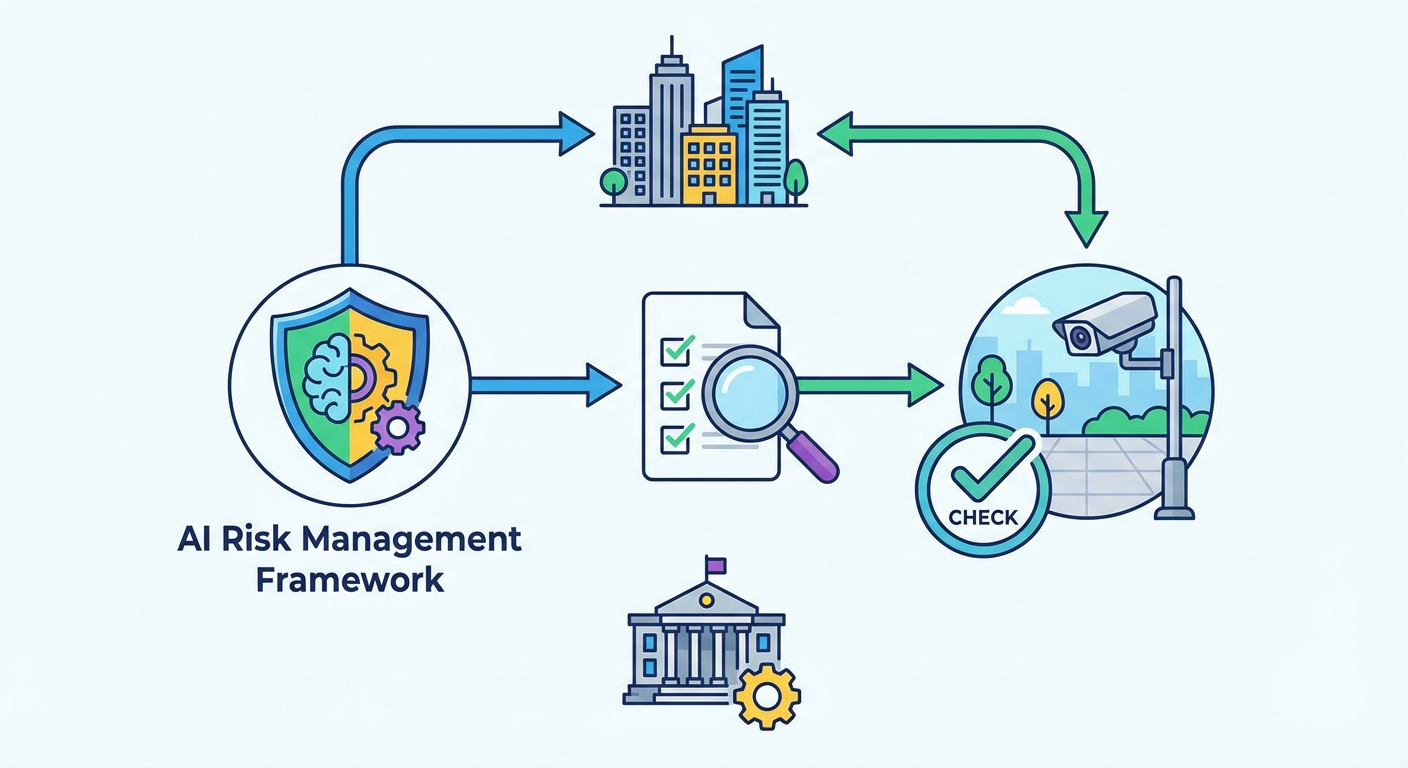
The National Institute of Standards and Technology released updated guidance for municipal AI procurement in 2025, specifically recommending mandatory algorithmic impact assessments before any public-sector AI surveillance gets deployed. This is essentially a technical and social audit—an honest examination of what the technology will do, who it might harm, and whether there are better ways to accomplish the actual goal. Only 11 U.S. cities had passed comprehensive AI use policies by early 2026 that include public notice, council approval, and annual auditing requirements. The framework exists. We’re just not using it.
Here’s what I did, and here’s what you can do starting this week. First, actually get the documents. Go to your city’s website, find the council meeting minutes from the past six months, search for keywords: surveillance, Axon, ALPR, facial recognition, predictive policing, AI. Most municipalities make these available online. Read them. This takes roughly 30 minutes and feels incredibly boring until you find something important. Second, file a public records request for the full contract. Ask for the statement of work, the capabilities, the pricing, the data retention policies, and any algorithmic documentation. The government has to provide this. They’ll drag their feet. Do it anyway. This takes about two weeks but gives you actual information to work with.
Third, talk to five people about it. Not at a protest. Just at coffee, or while walking the dog, or between meetings. Tell them what you found. You’ll be surprised how many people care once they know this is happening. Fourth, attend the next city council meeting. Bring those five people. Sign up to speak during public comment. You don’t need a prepared statement. You need to say: “I read the surveillance contract. I have questions about who approved this, what the actual capabilities are, and what the data retention policy says. Can we schedule a public hearing before this goes live?” That’s it. That’s the entire ask.
Fifth, if no one engages with your questions, file a formal request with your city council asking for a technology review and public comment period. You can do this by email. Include the phrase “mandatory algorithmic impact assessment” because your city council is supposed to know about this framework, and you’re making sure they remember it. Visit the Electronic Frontier Foundation Street-Level Surveillance page. They have templates for public comment and model policies. You can literally copy language that’s already been vetted by privacy experts.
The Part Where This Actually Becomes Possible
I’m telling you this because the alternative—silence, acceptance, assuming this is just how things work now—is how we end up living in surveillance systems we never chose and can’t escape. But also because I’ve seen what actually happens when even a small group of people start paying attention. Last year, a council member in a town similar to mine introduced an AI surveillance contract. Three community members showed up to public comment and asked questions. The vote got delayed. A technology review committee was formed. The contract was revised to include a one-year pilot, mandatory auditing, and a requirement to report to the community on accuracy and misidentification rates. None of that would have happened if nobody asked.
You don’t need to become a surveillance policy expert. You just need to care enough to read one document and show up once. Start with your city council minutes. Start this week. And then maybe grab coffee and tell someone else what you found. That part actually matters.