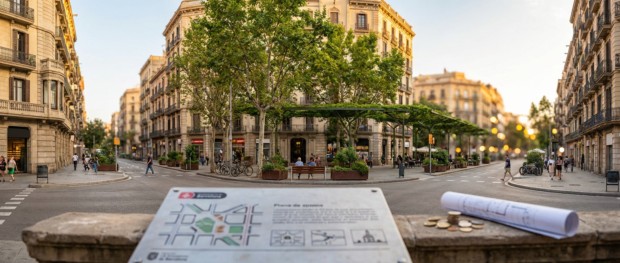
What Barcelona Actually Built (And Why It Works Better Than Anyone Expected)
Barcelona’s superblocks aren’t just painted bike lanes or weekend street closures. They’re a complete rethinking of how residential neighborhoods function, where entire blocks become pedestrian-priority zones while still allowing residents to drive to their front doors. Think of it as turning your neighborhood streets into something closer to a European town square, but without the tourist traps.
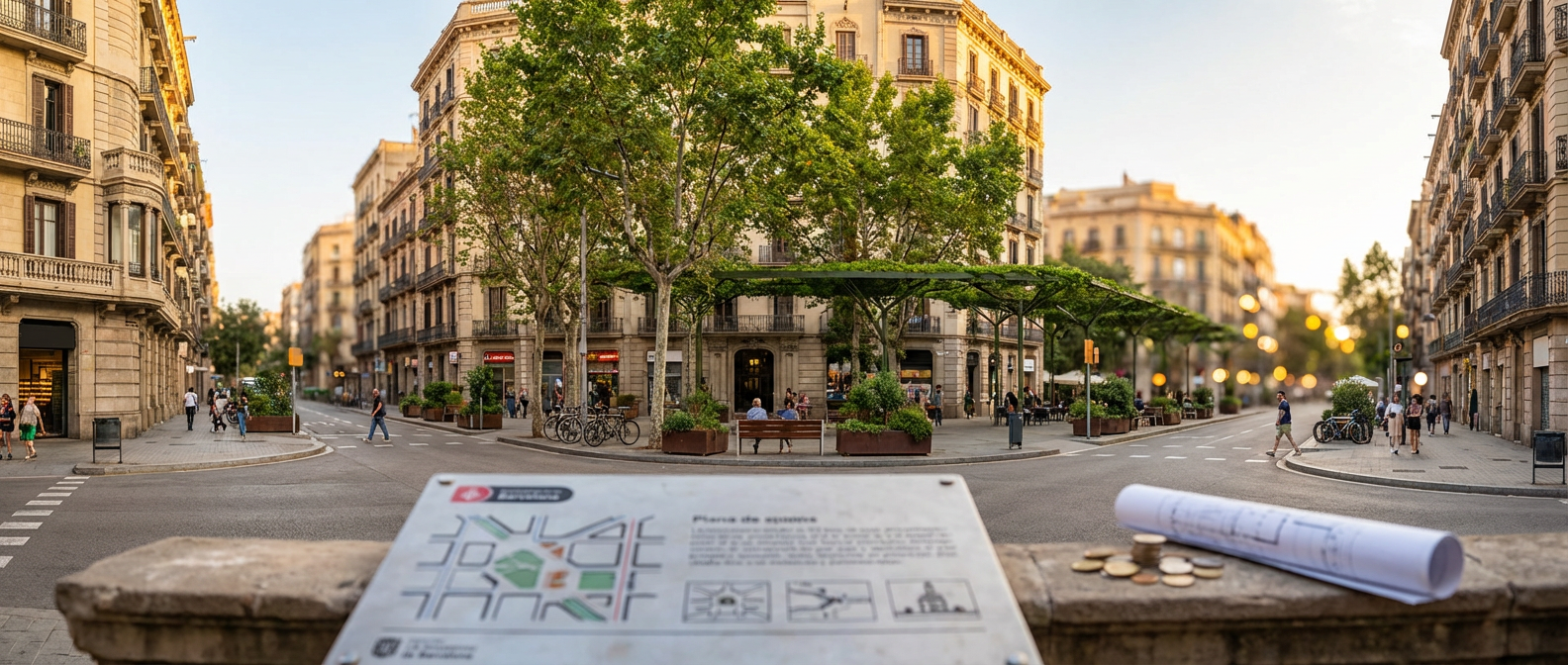
The second phase of Barcelona’s program, which wrapped up last year, shows results that should make every mayor take notice. Air pollution dropped by nearly a third in the 21 new districts where superblocks were implemented. That’s not just cleaner air for morning jogs. It’s measurably fewer kids with asthma, fewer emergency room visits for respiratory issues, and streets where you can actually hear your neighbor calling your name instead of shouting over traffic.
The mechanics are surprisingly straightforward. Barcelona removes about 70 percent of through-traffic from residential streets while keeping emergency vehicle access completely intact. Cars can still reach every address, but they can’t use neighborhood streets as shortcuts to avoid main arteries. It’s like putting up a gentle but effective “locals only” sign that actually works.
The Real Numbers: What It Costs and What You Get Back
Barcelona invested 180 million euros in their second phase rollout, covering districts with populations over 15,000 each. Before you start calculating exchange rates and panicking about your city budget, remember that this isn’t just road paint and traffic cones. That investment includes complete street redesigns, new public spaces, improved lighting, expanded sidewalks, protected bike infrastructure, and often new playground equipment or community gathering spaces.
Portland became the first US city to officially adopt Barcelona’s model, allocating 45 million dollars for a three-year pilot program. Portland’s Superblock Implementation Plan breaks down costs in ways that translate better to American city budgets, including everything from community engagement sessions to the inevitable legal challenges that come with changing how streets work.
The business impact numbers tell a story that every chamber of commerce should hear. Local businesses initially saw revenue drop about 8 percent in the first six months as traffic patterns shifted and people adjusted to new routes. But here’s the part that matters for long-term planning: after 18 months, those same businesses were seeing revenue 12 percent above their original baseline. Turns out, people who walk and bike spend more money locally than people driving through to somewhere else.
Why Your City Council Will Love This (Even the Budget Hawks)
City councils love projects that solve multiple problems with one budget line item, and superblocks deliver on that promise. The same infrastructure that reduces air pollution also decreases traffic accidents, creates new public space without buying expensive land, and generates measurable economic activity for local businesses. It’s the rare urban planning solution that makes both the environmental advocates and the fiscal conservatives nod approvingly during budget meetings.
The maintenance costs actually decrease over time. Less car traffic means less wear on neighborhood streets, fewer potholes to fill, and lower long-term resurfacing costs. Meanwhile, the new pedestrian and bike infrastructure requires minimal ongoing maintenance compared to constantly repaving roads designed for heavy vehicle traffic.
Emergency services consistently report that superblocks don’t slow their response times because the design maintains clear access routes while eliminating the traffic congestion that actually delays ambulances and fire trucks. Some Barcelona districts report faster emergency response times because emergency vehicles no longer get stuck behind cars using residential streets as shortcuts during rush hour.
The Implementation Reality Check (Because Nothing Is Ever Simple)
Let’s be honest about what implementing superblocks actually requires beyond the money. You need community buy-in from residents who might initially resist changes to their driving routines. You need local businesses on board, especially during that first six-month adjustment period when foot traffic patterns are shifting. And you need city staff who understand that this isn’t just a transportation project but a complete neighborhood redesign.
The legal framework varies significantly between cities, and some places will need zoning changes or city charter amendments before they can restrict through-traffic on residential streets. Barcelona had the advantage of European traffic laws that already prioritize pedestrian access differently than most American cities. But Portland’s pilot program is creating legal precedents that other US cities can adapt without starting from scratch.
Political timing matters enormously. Superblocks work best when they’re implemented as part of broader neighborhood improvements rather than standalone traffic restrictions. Cities that successfully launch these programs typically bundle them with popular amenities like new parks, improved lighting, or infrastructure repairs that residents already want.
Getting Started: Your Next Tuesday Night City Council Meeting
Barcelona’s Superblock Impact Report 2025 provides the technical details and impact measurements that city planners need to build a convincing proposal. But the real work starts with showing up to public meetings and asking questions about how your city currently handles neighborhood traffic, pedestrian safety, and local business support.
Start by identifying one neighborhood in your city that already functions somewhat like a superblock. Maybe there’s an area where through-traffic naturally avoids residential streets, or where local businesses cluster around walkable blocks. Use that as your proof of concept rather than trying to convince skeptics with examples from European cities they’ve never visited.
The most successful superblock advocacy combines hard data about costs and benefits with personal stories about how street designs affect daily life. Bring both the budget numbers and the stories about kids being able to play outside safely, seniors feeling comfortable walking to corner stores, and local restaurants thriving with expanded outdoor seating.
If you’re ready to dig deeper into how this might work in your specific city, start by requesting traffic count data for your neighborhood streets and attending the next transportation committee meeting. Most cities publish their meeting agendas online, and transportation committees are usually smaller, less formal settings where you can actually have conversations rather than just deliver three-minute public comments into the void.